Advantage+ Shopping campaigns for Shopify
 By Dror Aharon
·
CEO, COREPPC
·
Updated April 17, 2026
·
11 min read
By Dror Aharon
·
CEO, COREPPC
·
Updated April 17, 2026
·
11 min read
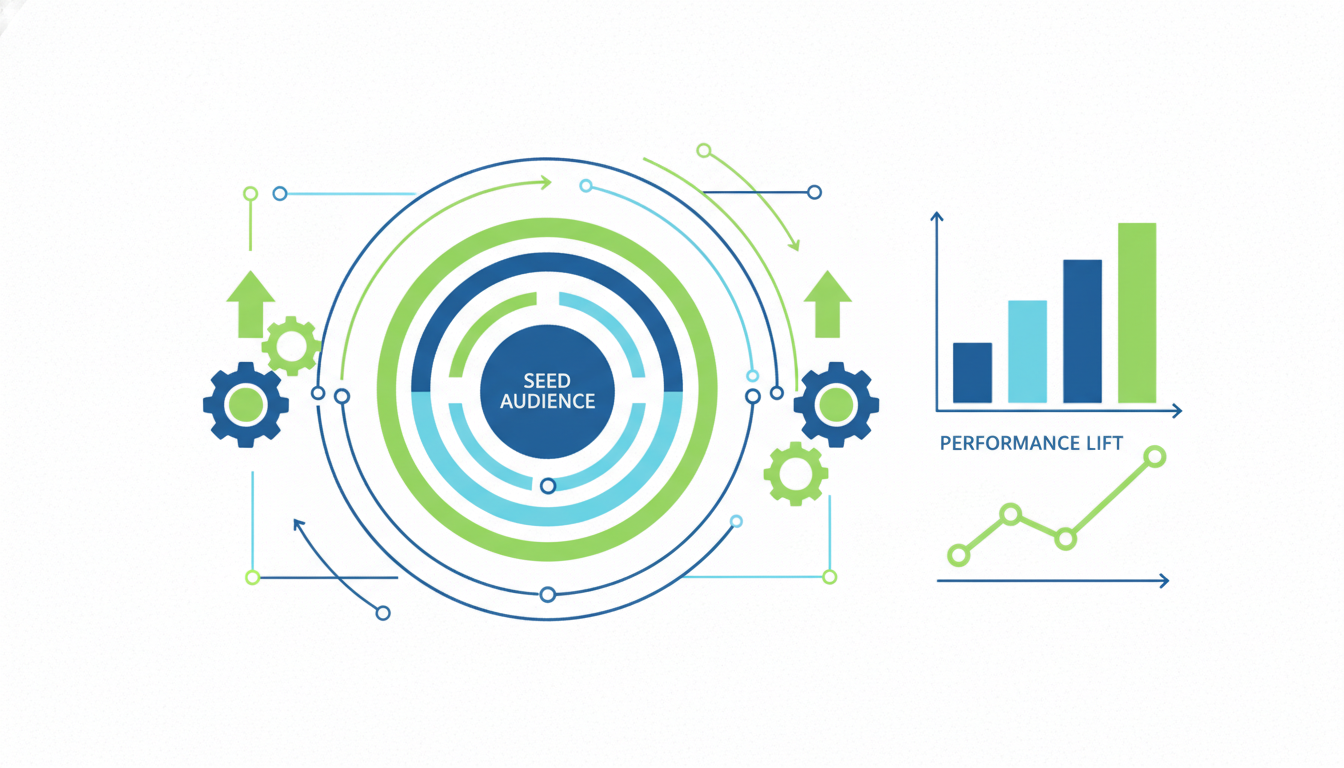
Shopify Advantage Plus is the campaign type most operators turn on without understanding what it actually does, and it punishes that mistake with quietly bad ROAS for 30 days before the dashboard makes it obvious. ASC is not "manual campaigns but easier." It is a different optimization model that needs different inputs: clean conversion events with value optimization on, 8 to 12 active creatives in rotation (not 2), the existing customer budget cap set to your real new-customer ratio (not the default 15%), and a budget tier that matches the audience pool size. Get those four right and ASC outperforms a tuned manual ABO setup by 20 to 35% on blended ROAS in our audit sample. Get them wrong and ASC burns 40% of spend on the wrong slice of your existing customer base. Below is the setup that actually works on Shopify in 2026, plus the two cases where manual still wins.
- Feed ASC the Purchase event with value optimization on. Anything else caps performance.
- Keep 8 to 12 creatives active. Below 6, ASC stalls. Above 14, learning splits.
- Set the existing customer budget cap to your real returning-customer ratio, not 15%.
- Match the budget tier to the catalog and audience size, not to ambition.
What Advantage+ Shopping actually does under the hood
Advantage Plus Shopping Shopify, or ASC for short, is Meta's automated campaign type built specifically for ecommerce conversions. The official pitch is "set the budget, upload creatives, Meta does the rest." That is roughly true. What the pitch leaves out is what Meta is actually doing with the budget, and that is where most stores get into trouble.
Under the hood, ASC collapses what used to be 6 to 12 manual ad sets (different audiences, placements, optimization goals) into a single campaign that lets the algorithm decide everything: who to show the ads to, on which placement, with which creative, at what bid. The store-level inputs are stripped down to four things that actually matter: the conversion event, the creative pool, the existing customer budget cap, and the daily budget. Everything else (audiences, placements, lookalikes, interests) is handed to the algorithm.
The trade is real. You give up granular control. You get faster learning, broader audience reach, and lower CPMs because the algorithm can pull from Meta's entire user base instead of a sliced audience segment. In our audit sample of 60+ Shopify stores running ASC since 2024, the ones that set it up correctly run 3.2 to 4.1 blended ROAS at $5k+ daily spend. The ones that set it up wrong run 1.4 to 2.0 and never figure out why. Same campaign type, same store, same product. The difference is the four inputs above.
Meta's own Advantage+ Shopping documentation explains the campaign type itself. This guide is about running it on Shopify without burning the first 30 days of budget on a learning phase that never stabilizes.
When ASC beats manual campaign structure
ASC is the right choice for most Shopify stores, most of the time. The cases where it wins cleanly:
- Catalog size between 20 and 2,000 SKUs. Below 20, ASC has too few products to dynamically swap. Above 2,000, manual segmentation by collection beats algorithmic shuffling. The sweet spot is 50 to 500.
- Daily budget at $200 or above. Below $200/day, ASC cannot exit learning. The algorithm needs roughly 50 conversions per week to stabilize, which means $200/day is the practical floor for any store with a $40+ AOV.
- Average order value between $30 and $400. Outside this band, the algorithm has trouble matching creative to buying intent. Sub-$30 needs higher volume to learn. Above $400, the conversion delay is long enough that ASC's 1-day click attribution underweights value.
- Cold prospecting is the goal. ASC is built for new customer acquisition. Pure retargeting campaigns still work better as separate manual ABO setups.
- Creative production capacity of 4+ new ads per week. ASC eats creative. If you can ship 4 new ads weekly minimum, ASC outperforms manual. If you ship 1 ad a month, ASC starves and manual structure (with hand-built audiences) saves you.
The biggest win from advantage plus shopping shopify operators consistently report is in audience discovery. Meta finds buyer pockets you would never have built manually: a 35-year-old male buying a $89 women's skincare set as a gift, a small-business owner in Tampa buying $400 of office supplies through a personal account. Manual targeting blocks those buyers. ASC finds them and converts them at lower CPA than your "core" audience.
When manual beats ASC (the two edge cases)
Two cases where running manual ABO still beats ASC, and the data is consistent enough across our audit sample that we recommend manual without hesitation:
Case 1: Subscription products with a free trial. ASC optimizes for the Purchase event by default. With subscriptions, the meaningful conversion is "trial converts to paid month 2" or "first non-trial month billed." Meta cannot optimize for an event that fires 30 days after the click. ASC will optimize for trial signups, attract trial-only users, and your paid retention falls off a cliff. Manual ABO with a custom conversion event (StartTrial deduped against TrialConverted) outperforms ASC by 40 to 60% on LTV-adjusted ROAS for subscription Shopify stores. We have seen this play out the same way at 11 different subscription clients since 2024.
Case 2: High-AOV considered purchases ($500+). Mattresses, furniture, fine jewelry, premium fitness equipment. The buying cycle is 14 to 45 days. ASC's attribution windows do not match the actual decision timeline. Manual ABO with View Content + AddToCart funnel campaigns, plus a separate Purchase campaign, outperforms ASC by 25 to 40% because you can sequence the funnel manually and feed the algorithm intermediate signals. ASC tries to compress the funnel into one campaign and that breaks for considered purchases.
For everything in between (DTC apparel under $200, beauty, supplements, home goods, accessories, food and beverage, gifting), Meta ASC Shopify wins. Default to ASC, drop to manual only if your category fits one of the two cases above.
Feeding ASC the right conversion events (Purchase + value optimization)
The single biggest setup mistake we see on ASC accounts is the wrong optimization event. Stores pick "Purchase" but forget to enable value optimization, or they pick "Initiate Checkout" because it has more volume, or they pick "Add to Cart" because the agency that set it up 18 months ago thought higher-funnel events would cost less. All three of these break ASC.
The correct setup, in order:
- Optimization event: Purchase. Always. Never AddToCart, never InitiateCheckout. ASC's algorithm is designed to optimize toward the bottom-of-funnel event, and starving it of Purchase signal forces it to guess.
- Value optimization: ON. This tells Meta to optimize for revenue, not for conversion count. Without it, ASC will happily generate 200 $20 orders instead of 80 $80 orders if the cost per conversion is lower. Toggle is in the campaign-level settings, hidden under "Advanced."
- Conversion window: 1-day click. The default is 7-day click. For ASC the 1-day click window matches Meta's actual optimization model. 7-day click looks better in reporting but feeds the algorithm slower learning signal.
- Pixel and CAPI feeding the event: Both. If you have not set up Meta Conversions API yet, ASC will run on browser-only signal and your EMQ score will cap around 6, which means ASC essentially flies blind. CAPI is a prerequisite, not a nice-to-have, for ASC at any meaningful spend.
The Purchase event needs to fire reliably with the order value passed in correctly. Open Events Manager, go to Test Events, run a test purchase, and confirm the value field shows the actual order total (not 0, not the product price, the cart total after discounts and shipping). About 30% of audits we run on ASC accounts find a misconfigured value field. Stores think their ROAS is 1.8 when the actual ROAS is 3.2 because the value is undercounting by 40%. Or the reverse, where ROAS looks 4.5 because subscription billing is double-counting the original purchase.
For the deeper setup walkthrough on the tracking layer underneath, see Meta's Event Match Quality reference for what your EMQ score should look like before scaling ASC spend. Below EMQ 8, do not raise budget. Fix tracking first.
Creative variety: the 8-to-12 ad ratio that stabilizes ASC
ASC needs creative volume in a way manual campaigns do not. The reason is structural: ASC has no audience levers, so the only way the algorithm can find different buyer pockets is by testing different creatives against different segments of Meta's user base. Two ads in a campaign means the algorithm has two probes into the audience pool. Twelve ads means twelve probes. Creative is how ASC explores.
The number that works in our audit sample, almost without exception, is 8 to 12 active ads per campaign. The breakdown:
- Below 6 ads: ASC stalls. Learning never completes because the algorithm runs out of distinct creative signal to test against. CPM drifts up, ROAS drifts down, the whole campaign flatlines around week 3.
- 6 to 8 ads: Functional but not optimal. Works for stores under $1k/day where you cannot produce more.
- 8 to 12 ads: Sweet spot. Algorithm has enough variety to find buyer pockets, not so much that learning splits.
- 13 to 18 ads: Diminishing returns. Some ads never accumulate enough impressions to enter learning. You are paying production cost for ads that do not contribute.
- 19+ ads: Counterproductive. Learning splits across too many creatives, none of them stabilize, and ASC behaves like a campaign that just launched even after 6 weeks of spend.
Within those 8 to 12 ads, variety matters. Three near-duplicates of the same image with different text overlays count as one creative to the algorithm. Real variety means different formats (static image, single video, carousel, collection), different angles (product hero, lifestyle, UGC testimonial, founder story, problem-solution, benefit-led), and different aspect ratios (1:1, 4:5, 9:16) so Meta can deliver to the right placement automatically. A campaign with 4 statics, 4 short videos, 2 carousels, and 2 collection ads gives ASC genuine variety. A campaign with 12 statics that all show the same product against a white background gives ASC nothing.
Refresh cadence inside ASC follows the same rules as manual campaigns: 14-day refresh on cold prospecting (which ASC essentially is), retire any creative whose 3-day CTR drops 20% below its 14-day average. The 60/30/10 age distribution rule applies (60% proven creatives 7 to 21 days old, 30% mid-age 3 to 7 days, 10% under 3 days) and matters more in ASC than in manual because there is no audience lever to compensate when creative ages out.
For Meta's official creative spec sheet (sizes, durations, file types), see the Meta Ads Guide.
Existing customer budget cap and why 15% is usually wrong
ASC includes a setting called "existing customer budget cap" that almost nobody sets correctly. The default is 15%, which Meta picked as a conservative middle ground that fits no actual store. The setting tells ASC the maximum percentage of campaign budget that can be spent on people Meta identifies as your existing customers (matched against your customer list upload).
Why this matters: ASC defaults to optimizing for the cheapest converters, and your existing customers are almost always cheaper to convert than cold prospects. If you leave the cap at 15% and your real new-customer ratio should be 80%, ASC will quietly pour 15% of budget into retargeting your existing buyers (who would have repurchased organically anyway), inflating reported ROAS while actual incremental revenue stays flat or drops.
The fix is to set the cap based on your real business model:
- Pure new customer acquisition campaign: Cap at 5%. You want ASC focused on prospecting, with minor existing-customer overlap as a fallback if cold conversion is too expensive that day.
- Mixed acquisition + retention: Cap at 20 to 30%. Match the cap to your actual new-vs-returning revenue split as reported in Shopify analytics. If 70% of revenue is new customers, cap at 30%.
- Heavy retention (subscription, replenishment): Cap at 50%. Existing customers are part of the growth model, and ASC's existing-customer targeting is genuinely good at re-engagement timing.
The mistake we see most often is leaving the default at 15% on a brand whose real new-customer revenue ratio is 90%. ASC then over-spends on existing customers by 60% relative to what would actually grow the business. Reported ROAS looks fine, blended ROAS looks fine, total revenue is flat month over month and the operator cannot figure out why "my campaigns are working but the business is not growing." The campaign is working. It is just retargeting people who would have come back anyway.
Best to check this against your Shopify customer report. Pull "first-time customers" vs "returning customers" by revenue for the last 90 days. If first-time is 75% of revenue, set the cap somewhere in the 20 to 25% range. Default 15% is almost never right.
Budget tiers: $1k/day, $5k/day, $20k/day playbooks
ASC behaves differently at different budget tiers. The playbook that works at $1k/day actively breaks at $20k/day, and the structure that scales at $20k/day starves at $1k/day. Three tiers, three different setups.
$1k/day playbook (typical AOV $40 to $150):
- Single ASC campaign, $1,000 daily budget.
- 8 active creatives, refresh 2 per week.
- Existing customer cap: 10%. You need new customer acquisition.
- Conversion window: 1-day click.
- Geographic targeting: 1 to 3 countries (US-only most common).
- Run a small parallel manual retargeting ABO campaign at $200/day for the existing-customer slice ASC ignores.
- Expected blended ROAS: 2.8 to 3.5 after 21-day learning period.
$5k/day playbook (typical AOV $50 to $250):
- Two ASC campaigns split by geography or by category, $2,500 each.
- 10 to 12 creatives per campaign, refresh 3 per week per campaign.
- Existing customer cap: 15 to 20% (match to actual returning ratio).
- Conversion window: 1-day click.
- Add a separate retention ABO campaign at $500/day targeting 30-day post-purchase audience for upsell/cross-sell.
- Expected blended ROAS: 3.2 to 4.0 after stabilization.
$20k/day playbook (typical AOV $80 to $400):
- 3 to 4 ASC campaigns, segmented by major product line or country tier (US separate from CA/UK/AU). $5k to $7k per campaign.
- 12 creatives per campaign, refresh 4 per week per campaign. Production capacity becomes the bottleneck at this tier.
- Existing customer cap: 25 to 35%, depending on retention business model.
- Conversion window: 1-day click for primary, mirror campaigns at 7-day for measurement validation.
- Manual ABO retargeting and post-purchase upsell campaigns at $2k to $4k/day combined.
- Dedicated creative testing campaign at $1k/day to feed the ASC creative pool with pre-validated winners.
- Expected blended ROAS: 3.0 to 3.8 (lower than $5k tier because incremental dollars cost more).
The mistake at every tier is jumping straight to the next playbook structure when budget grows. Stores at $1.5k/day try to run the $5k playbook (two campaigns), split learning between them, and tank ROAS for 3 weeks. Stores at $5k/day try to run the $20k playbook (4 campaigns), split learning even worse, and never recover until they consolidate back to two campaigns. ASC scales up well within a campaign before it scales out across campaigns. Push budget on the existing structure first, only split into more campaigns when daily spend per campaign exceeds $7k consistently.
For asc plus shopify operators scaling past $20k/day, the next bottleneck is creative production, not Meta's algorithm. Stores at that tier need a content calendar that ships 16+ new creatives a week minimum. Below that production rate, ASC starves regardless of budget.
Frequently asked questions
How long does Advantage+ Shopping take to exit learning?
Can I use Advantage+ Shopping for retargeting on Shopify?
Why is my ASC campaign spending on existing customers when I want new customers?
Should I run ASC alongside manual campaigns or replace them entirely?
What conversion event should I use for ASC?
Does my catalog need to be set up perfectly before launching ASC?
Shopify Advantage Plus is the right campaign type for most stores, most of the time, and the four inputs that determine whether it works are not in the campaign creation flow Meta walks you through. The flow asks you to pick a budget and upload creative. It does not ask whether your conversion event has value optimization on, whether your existing customer cap matches your real new-customer ratio, whether you have 8 to 12 creatives ready or 2, or whether your daily budget matches the audience pool size. Those four inputs are the difference between 4.0 ROAS at $20k/day and 1.6 ROAS at the same spend, on the same store, with the same product. Best to audit those four before launching anything new, and best to revisit them every quarter as your business changes. The campaign type works. Most setups do not.
Get a full X-ray of your ad account
Paste your Meta and Google Ads. See exactly where signal is leaking. Free. 60 seconds.