Meta retargeting audiences that actually convert for Shopify
 By Dror Aharon
·
CEO, COREPPC
·
Updated April 17, 2026
·
11 min read
By Dror Aharon
·
CEO, COREPPC
·
Updated April 17, 2026
·
11 min read
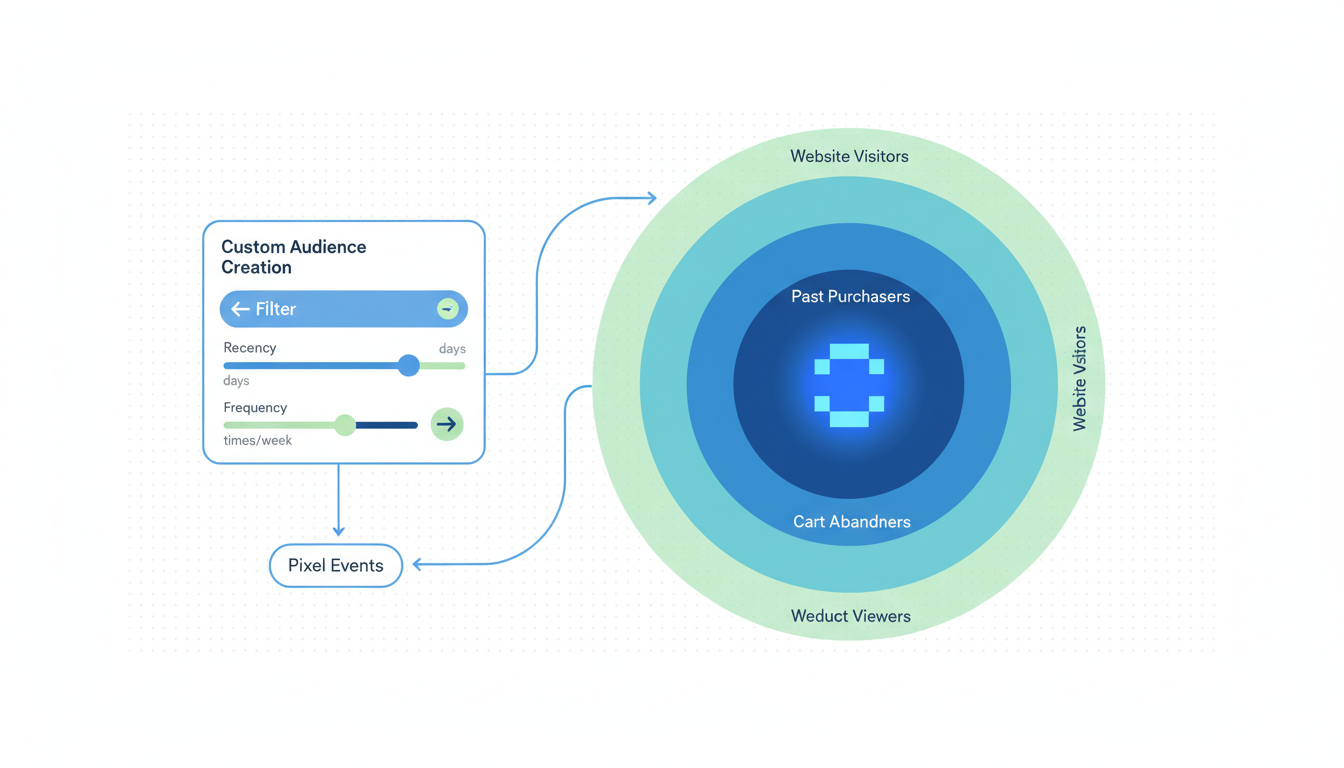
Shopify Meta retargeting is the single most overspent line in most ecom ad accounts in 2026, and the reason is that almost every store builds the same 15 audiences a Klaviyo or Shopify blog post recommended in 2021. Those audiences look profitable on the dashboard because warm traffic converts anyway, but the incremental lift from running them is usually flat. We have audited around 40 Shopify stores a month since 2023, and the pattern is consistent: stores burning 30 to 50% of Meta spend on retargeting see lower true blended ROAS than stores capping retargeting under 15% and pushing the rest into cold prospecting. Five audiences are worth building. Ten that everybody builds are noise. Budget split has a hard ceiling at 15 to 20% of total Meta spend. The incrementality test below is the only honest way to know if your retargeting is actually moving the P&L.
- 5 audiences carry 90% of real retargeting revenue. The other 10 are noise.
- Retargeting ceiling: 15 to 20% of total Meta spend, no exceptions.
- Run an incrementality test every quarter. Pause for 14 days, measure.
- Static beats UGC for retargeting creative. Counterintuitive, true anyway.
What retargeting on Shopify actually is in 2026
Shopify Meta retargeting is the practice of showing ads to people who already touched your store: site visitors, AddToCart no-purchase, past customers, video viewers, social engagers, email subscribers. The pixel and CAPI feed Meta a list of who did what, and you build Custom Audiences off those lists, then serve them ads. That is the whole mechanic. What changed in 2026 is not the mechanic, it is the math underneath.
Three things shifted between 2022 and now. First, iOS 14.5 and the Safari and Firefox cookie crackdowns of late 2025 cut the size of every site-visitor audience by roughly 40 to 60%. A 30-day site visitor audience that held 80,000 users in 2021 holds 30,000 to 45,000 today on the same traffic. Second, Meta's algorithm got dramatically better at finding warm-intent users on its own through Advantage+ Shopping, which means a lot of the people you "retarget" would have been served the same ad anyway through cold prospecting. Third, attribution windows tightened to a default 7-day click and 1-day view, which means retargeting credit gets concentrated on a smaller window and inflates reported ROAS even more than it used to.
Net result: the playbook from 2021, which was "build 15 audiences and run them all", produces worse outcomes today than it did then. The audiences are smaller, the incremental lift is lower, and the algorithm is doing more of the heavy lifting on its own. Most stores have not updated the playbook. They are still running the same 15 audiences, still allocating 30 to 40% of spend to them, still reporting 4.5 ROAS on the retargeting line, and still wondering why blended ROAS is stuck at 1.8.
This guide is about which 5 audiences are still worth running, which 10 are not, how to split budget so retargeting does not eat prospecting, and how to run the one test that tells you whether your retargeting is actually working or just stealing credit.
The 5 audiences worth building
Out of the dozens of Custom Audience types you can build in Meta, five carry 90% of the real incremental revenue we see in audits. The rest are either too small post-iOS 14.5, too overlapped with prospecting, or so warm that the conversions would have happened without the ad.
1. Past purchasers, 30 to 90 days, for a complementary SKU push. This is the only retargeting audience where incrementality reliably tests positive on every store we audit. Past customers know the brand, trust the product, and buy a second time when shown a relevant adjacent SKU. Apparel: someone who bought the hoodie gets the joggers. Supplements: someone who bought the protein gets the creatine. The trick is the SKU has to be different from what they bought, and the offer has to be specific. Generic "shop new arrivals" creative on this audience gets 1.5 ROAS. SKU-specific cross-sell creative gets 4 to 7 ROAS.
2. AddToCart, no purchase, last 7 days, with a 5 to 10% offer. Tight window matters. AddToCart users at day 14 have already moved on. Day 7 still has intent. Pair the audience with a coupon code in the creative ("CART10" or similar) and you recover roughly 20 to 35% of cart abandons that the Klaviyo flow misses. This is the audience that actually proves out in incrementality tests, because the 7-day window catches users still in the consideration loop.
3. InitiateCheckout, no purchase, last 3 days. Smaller than AddToCart but higher intent. These are users who clicked through to checkout, hit a shipping cost or a payment friction, and bounced. Show them a specific friction-killer message: free shipping over $X, money-back guarantee, ships in 24 hours. Conversion rate on this audience runs 2 to 4x AddToCart. Volume is small, so cap the budget at $20 to $40 a day or you will hit frequency 8+ inside a week.
4. 30-day video viewers at 75% completion, on cold-traffic ads. This is the warmest cold audience that still counts as retargeting. Someone who watched 75% of your founder-story or product-demo video on a cold ad has self-qualified as interested. Serve them a different angle: testimonial, before-and-after, founder POV. Incremental lift here is usually decent because the video viewer pool is real engagement, not just a tracking pixel ping. Builds best when the source video is 30 to 60 seconds long.
5. Email and SMS subscribers synced from Klaviyo, 90-day engaged segment only. Not the full list. The full list includes dead subscribers who unsubscribed mentally three years ago. The 90-day engaged segment (opened or clicked in last 90 days) is the slice worth syncing. We cover the Klaviyo sync mechanics in the customer-list section below. Used right, this audience runs 5 to 8 ROAS because it stacks ad signal on top of email signal for the same user, and Meta finds them across surfaces email cannot reach (Reels, Stories, in-app browsing).
That is the list. Five audiences. If your account has more than five retargeting audiences live, you are diluting budget and overlapping users across audiences, which makes Meta bid against itself in the auction. The fix is not "test more audiences", the fix is consolidate to these five and feed the rest of the budget to prospecting.
The 10 audiences everyone builds and nobody needs
These are the audiences that show up in every Shopify Meta retargeting template you can find online, and almost none of them survive a real incrementality test. We have killed all 10 across multiple client accounts and watched blended ROAS hold or climb, every time.
- All site visitors, 180 days. Way too broad. Most of these users forgot the brand exists. Frequency cap will hit 12+ on the active ones inside a month and burn impressions on dead users.
- All site visitors, 30 days. Better window but still no intent filter. Most "30-day visitors" bounced from a single page. Cold prospecting reaches them more efficiently.
- Page view of any product page, 30 days. Sounds like intent. Is not. A view of a product page is the lowest possible signal. ATC is the floor for real intent.
- AddToCart, 30 days. Window is too long. Day 14 onwards is dead intent. We see this audience burn budget on people who already bought from a competitor.
- Past purchasers, all-time, no SKU filter. Generic "shop new arrivals" to a 3-year-old customer almost never converts. Past purchaser audiences only work with a specific cross-sell SKU and a tight 30 to 90 day window.
- Instagram engagers, 365 days. Too warm and too overlapped with prospecting. Most of these users will see your ads through Advantage+ anyway. Running them as a separate audience just doubles the frequency.
- Facebook Page engagers, 365 days. Same problem as Instagram engagers, plus the audience skews older and lower-intent on most ecom brands.
- Video viewers, 25% completion. 25% completion is not engagement. Most users scroll past at the 3-second mark and the auto-play counts that as a "view". 75% is the floor for real signal.
- Lookalike of past purchasers, 1%, run as retargeting. This is a prospecting audience misclassified as retargeting. Building it is fine. Counting it against your retargeting budget cap is wrong, because it serves cold users.
- Email subscribers, full list, no engagement filter. Same problem as past purchasers all-time: dead subscribers dilute the audience and tank match quality. Sync the 90-day engaged segment, not the full list.
If any of those 10 are live in your account today, audit them this week. Pause them, hold prospecting flat, watch total Shopify revenue for 14 days. If revenue does not drop, the audience was noise and you can keep them paused permanently. The most common outcome in our client audits: we kill 6 to 8 of those 10, and blended ROAS lifts 15 to 25% inside a month because the freed budget moves to prospecting. See Meta's Custom Audiences documentation for the full list of audience types Meta supports. The list is long. Most of it is not worth building.
Retargeting budget split: the 15% ceiling and why
The single most useful rule we have for Shopify retargeting audiences in 2026 is this: total retargeting spend should sit between 10 and 20% of total Meta spend, and 15% is the right starting target for most stores. Above 25% you are starving prospecting and your store stops growing. Below 10% you are leaving real cart-recovery revenue on the table. The 15 to 20% ceiling holds across DTC ecom verticals we have audited, from $10k a month spend up to $400k a month.
The math behind the ceiling is simple. Cold prospecting is what brings new customers into the store. Retargeting is what helps some of them complete a purchase they were already considering. If you spend 40% of budget on retargeting, you are spending 40% on the second job and only 60% on the first job, which means your customer acquisition rate slows down. Six months later, you have a smaller pool of warm users to retarget against, because the cold flywheel slowed. Retargeting cannibalizes itself if you let it run too hot.
The split we run on most clients, by audience type:
- Cold prospecting (Advantage+ Shopping, broad targeting): 60 to 75% of spend. This is the engine.
- Lookalikes (1 to 3% from purchaser seed): 10 to 20% of spend. These count as cold for budget purposes, even though they are LAL.
- Retargeting (the 5 audiences from above, combined): 10 to 20% of spend. Hard ceiling at 20%.
Inside the retargeting bucket, the split between the 5 audiences is roughly even, with two adjustments. Past purchasers cross-sell gets the largest slice (around 35% of retargeting budget) because incrementality tests highest there. InitiateCheckout 3-day gets the smallest slice (around 10%) because volume is small and frequency hits the cap fast. The other three audiences split the rest evenly.
The budget-split mistake we see most often is treating retargeting as a "set budget cap and forget" line item. As cold prospecting scales and total Meta spend grows, retargeting budget needs to scale proportionally so the ratio holds. Otherwise the retargeting audiences hit frequency 10+ inside three weeks and CTR collapses. The simple rule: review the ratio every Monday. If retargeting drifted above 22% or below 8% of last week's spend, rebalance.
Incrementality: the test that honest retargeting survives
The dirty secret of facebook retargeting Shopify operators do not want to hear: most retargeting audiences fail an incrementality test. Reported ROAS on the retargeting line says 5x, blended ROAS says 1.8x, and when you pause retargeting for 14 days, total Shopify revenue does not move. That gap is the audience stealing credit from organic, direct, and email traffic that would have converted anyway.
The test is brutal but honest. Here is how we run it on every account once a quarter:
- Pick one retargeting audience to test (start with whichever has the highest reported ROAS, because that is where the credit-stealing is most likely happening).
- Pause that audience for 14 days. Hold all other Meta spend flat. Hold Klaviyo flows flat. No new email campaigns, no SMS blasts.
- Track total Shopify revenue across the 14 days, compared to the trailing 14 days before the pause.
- Adjust for seasonality. If you are testing in Q4 against Q3, you need a seasonality benchmark from the prior year.
- If revenue holds within 5% of baseline, the audience was not incremental. Keep it paused permanently and move the budget to prospecting.
- If revenue drops more than 10%, the audience was contributing real incremental conversions. Turn it back on.
- If revenue drops 5 to 10%, run the test again next quarter. Inconclusive on a 14-day window.
The result we see across maybe 60% of incrementality tests run on Shopify accounts: the audience was not incremental. The reported ROAS was credit theft from organic traffic. This is uncomfortable to admit because it means a significant chunk of "retargeting performance" was a measurement artifact, not real revenue. It is also why the 15 to 20% budget ceiling exists: even if some retargeting is real, the inflation factor on reported ROAS is so high that you cannot trust the dashboard to tell you when to scale.
The audiences that survive incrementality tests most consistently in our data: past purchasers cross-sell (almost always positive), AddToCart 7-day with offer (usually positive), InitiateCheckout 3-day (usually positive at small budgets). The ones that fail most often: Instagram engagers, Facebook Page engagers, all site visitors, video viewers at 25%. That is roughly the same split as the "5 worth building, 10 to skip" framework above, which is not a coincidence.
Customer list audiences and the Klaviyo sync setup
Customer list audiences (uploaded CSV or synced from Klaviyo) are one of the highest-ROAS retargeting layers when you build them right and one of the worst when you build them wrong. The difference is the engagement filter.
The setup that works:
- In Klaviyo, build a segment called "Engaged 90d Email + SMS". Filter: opened or clicked an email in the last 90 days, OR clicked an SMS in the last 90 days. This is your real audience. Most Shopify stores at $500k+ ARR have 8,000 to 30,000 users in this segment, depending on list health.
- Connect Klaviyo to Meta through the native Klaviyo Meta integration. Sync runs every 24 hours, so the audience stays fresh without manual CSV uploads.
- Inside Meta Ads Manager, the synced audience appears as a Custom Audience. Build a Custom Audience around it, then build a 1% Lookalike from it for cold prospecting. Two audiences from one sync.
- Use the Custom Audience for retargeting (a single ad set, $30 to $50 a day, 4 to 6 creatives in rotation). Use the 1% Lookalike for cold prospecting (separate budget, separate campaign).
- Refresh the Custom Audience every 30 days. Klaviyo handles the daily sync, but Meta's audience match quality drifts over time, so a manual refresh of the audience definition once a month keeps EMQ above 8.
The setup that does not work: syncing the full Klaviyo list with no engagement filter, getting 80,000 dead subscribers in the audience, and watching match quality sit at 4. Meta cannot match users who signed up four years ago and have not opened an email since. The 90-day engaged filter is not optional.
For stores not on Klaviyo, the same logic applies with whatever ESP you are using (Postscript, Attentive, Sendlane). Build the engaged 90-day segment, sync to Meta, refresh monthly. If your ESP does not have a native Meta integration, a weekly CSV upload from the engaged segment is fine. The native sync is just less manual.
One more lever worth knowing: the past purchaser cross-sell audience from the "5 worth building" list is built off a customer list, not a pixel event. Sync the 30 to 90 day buyer segment from Klaviyo or Shopify directly, and pair it with SKU-specific creative. That combination is where the highest-ROAS retargeting in your account will live.
Retargeting creative: why static beats UGC here
The counterintuitive finding from creative tests across roughly 80 Shopify accounts since 2023: static creative outperforms UGC video on retargeting audiences, by 30 to 60% in CTR and 20 to 40% in conversion rate. The reverse is true on cold prospecting, where UGC wins by similar margins. Most operators apply the cold prospecting playbook (UGC, founder POV, before-and-after) to retargeting and watch performance suffer.
Why static wins on retargeting: the user already knows the brand and the product. They do not need a story or a problem-agitation hook. They need a reason to come back and complete the purchase. Static creative delivers that reason fast: a clear product shot, a specific offer, a concrete benefit, a tight CTA. The user makes the decision in 1 to 2 seconds. UGC video on the same audience asks them to sit through a 15-second story they already heard from the cold prospecting ad.
The retargeting creative formats that consistently win in our tests:
- Product shot + 5 to 10% offer overlay. "Still thinking it over? Take 10% off with CART10." Clean product image, big offer text, tight CTA.
- Cart abandon reminder with the exact product. Pull the SKU dynamically through DPA (Dynamic Product Ads) so each user sees what they actually added to cart. Highest-performing format on the AddToCart 7-day audience.
- Friction-killer message for InitiateCheckout users. "Free shipping on orders over $50. Ships in 24 hours." Static, no video, focused on the specific objection that bounced them.
- Cross-sell SKU shot for past purchasers. "Loved your hoodie? Pair it with the joggers." Side-by-side product shot, clear bundle offer.
UGC has a place in the retargeting mix, but a small one. The format that works is testimonial UGC on the 30-day video viewer audience: someone who watched 75% of a founder video on cold and then sees a 10-second customer testimonial on retargeting. Stack of two warm signals, two different formats. That works. UGC product demos repeated to AddToCart 7-day users do not. The user already saw the demo on cold. Showing it again is wasted impressions.
Production cost is the practical reason this matters. Static creative for retargeting costs $50 to $200 per asset to produce internally. UGC video costs $300 to $800 per asset through a creator. If static performs 30% better on the audience that drives the cleanest retargeting revenue, the cost-per-conversion gap is even wider than the CTR gap. Build static-heavy creative libraries for retargeting. Save UGC budget for cold.
Frequently asked questions
What percentage of Meta budget should go to retargeting on Shopify?
How often should I refresh my Meta custom audiences for Shopify?
Does Advantage+ Shopping handle retargeting automatically?
Can I build retargeting audiences without the Meta pixel?
How do I know if my retargeting is incremental or just stealing credit?
Should I retarget past customers or just acquire new ones?
Shopify Meta retargeting in 2026 is a smaller, more focused practice than the playbook most operators are still running from 2021. Five audiences. 15 to 20% of spend. Quarterly incrementality tests. Static creative, not UGC. Klaviyo synced engaged segments, not full lists. The stores that hold to those rules see blended ROAS climb because the freed budget moves to cold prospecting, which is where growth actually happens. Best to audit your retargeting setup against the "5 worth building, 10 to skip" framework above before you touch creative or budgets. If more than half your retargeting audiences are on the "skip" list, pause them this week, hold prospecting flat, watch revenue for 14 days. The pattern holds in roughly 60% of accounts: revenue does not drop, blended ROAS lifts inside a month, and the dashboard finally tells the truth instead of a story the algorithm wanted you to believe.
Get a full X-ray of your ad account
Paste your Meta and Google Ads. See exactly where signal is leaking. Free. 60 seconds.