Attentive vs Postscript for Shopify SMS
 By Dror Aharon
·
CEO, COREPPC
·
Updated April 17, 2026
·
11 min read
By Dror Aharon
·
CEO, COREPPC
·
Updated April 17, 2026
·
11 min read
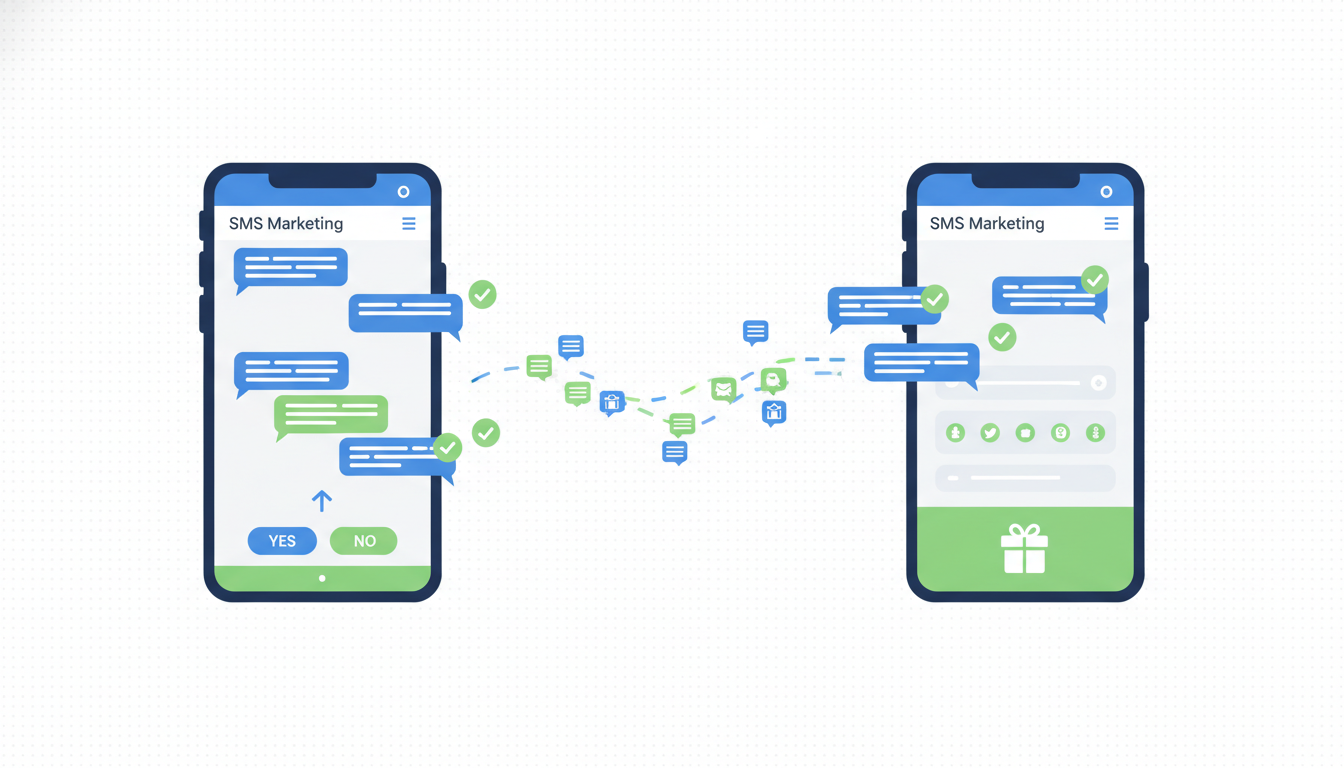
Attentive vs Postscript on Shopify is the comparison most 7- and 8-figure DTC operators run a year too late, usually after a TCPA letter or a per-message bill that doubled overnight. The honest answer in 2026: Attentive wins on hand-holding, compliance lawyer access, and managed onboarding for stores that want SMS to mostly run itself. Postscript wins on per-message economics at scale, Shopify-native flow logic, and operator control for teams that already know what they want to send. Both read your Shopify orders cleanly, both clear the basic TCPA bar, and both will charge you more than the marketing pages suggest. What actually decides it is monthly send volume, whether you have an in-house lifecycle marketer, and how much compliance risk you can carry yourself. We have migrated stores in both directions. Picking wrong costs $8k to $25k and 6 weeks of flow rebuild.
- Attentive fits 9-figure DTC with no in-house SMS lead, wanting managed strategy and TCPA cover.
- Postscript fits 7-to-8-figure DTC with a lifecycle operator who wants control and lower per-message cost.
- Per-message math flips around 250k monthly sends, where Postscript pulls meaningfully cheaper.
- Migration costs $8k to $25k and roughly 6 weeks. Pick once, build the keyword tree right.
Why Shopify SMS is a different app category than email
Shopify SMS app comparison conversations almost always start in the wrong place, because operators reach for the email playbook and then get surprised when none of it applies. SMS is a regulated channel, the per-message cost is real, the inbox is shared with someone's mom and their doctor, and the unsubscribe rate punishes mistakes within hours instead of weeks. None of that is true for email, and the tools reflect it. Attentive and Postscript are both built around that reality, which is why neither of them looks much like Klaviyo or Omnisend even though they sit next to those tools in the stack.
The two big differences that shape every other decision: first, every message has a hard cost (somewhere between $0.008 and $0.025 per US SMS depending on volume and vendor), so you cannot just blast the list and clean up later. Second, TCPA fines are per-violation and stack, so a sloppy keyword setup or a missing express consent flow turns into a class action problem fast. Attentive and Postscript handle these two problems differently, and the difference is most of the answer to "which should I pick."
For context, the legal floor is set by the FCC's TCPA rules on text messages. Both vendors clear that floor. Where they differ is how much of the work above the floor they take on for you, vs. how much you handle yourself. That maps cleanly onto the rest of this comparison.
Pricing reality at 10k, 50k, 250k subscribers
Pricing is where both vendors get genuinely slippery, because neither publishes a clean per-message rate the way Klaviyo does for email. Attentive's pricing page runs custom enterprise quotes for almost everyone above 10k subscribers and bundles platform fees with message credits. Postscript's tiered pricing looks straightforward but adds carrier fees, MMS premiums, and a separate cost for the AI features. The numbers below are pulled from active client contracts and current public pricing as of April 2026.
Estimated all-in monthly cost (US-only, mixed SMS + MMS, typical 4 sends per subscriber per month):
| Subscribers | Monthly sends | Postscript | Attentive | Notes |
|---|---|---|---|---|
| 10,000 | ~40,000 | $400 to $550 | $700 to $1,200 | Attentive premium covers managed onboarding |
| 50,000 | ~200,000 | $1,800 to $2,400 | $3,200 to $4,500 | Gap widens as send volume grows |
| 250,000 | ~1,000,000 | $7,500 to $10,500 | $14,000 to $22,000 | Custom contracts on both, Attentive higher |
| 500,000 | ~2,000,000 | $14,000 to $20,000 | $28,000 to $45,000 | Enterprise pricing, both negotiable |
Two things to flag up front. The Attentive price range is wider because almost every contract is custom and the negotiated rate depends on your willingness to commit to a 12 or 24 month term. Stores that sign annual deals with growth commits land at the lower end. Stores on month-to-month sit at the higher end. Postscript's range is narrower because the published tiers are closer to what you actually pay, with a few common add-ons (AI text generation, advanced segmentation, dedicated IP) bumping the bill 15 to 25%.
The per-message math, which is the number that actually matters at scale: Postscript runs around $0.0095 to $0.0105 all-in per US SMS at 50k subscribers, dropping to $0.0075 to $0.0085 at 250k. Attentive runs around $0.016 to $0.022 per US SMS at the same volumes. So at 1 million sends a month, the per-message gap alone is roughly $7,000 to $12,000 monthly. That is not a small number, and it is the reason most 9-figure DTC stores running Attentive eventually run a Postscript pilot to see if the operations savings of Attentive justify the per-message premium.
The trap to watch on both: carrier fees and MMS surcharges are billed separately and usually do not show up in the initial quote. A Shopify store sending mostly SMS with occasional MMS (product images on launches) will pay another 8 to 15% on top of the base rate. Best to ask for a sample bill from a similarly sized store before signing.
TCPA compliance: where each one helps vs where you are on your own
TCPA is the part of the postscript vs attentive question where the marketing pages from both vendors get the most aggressive about claiming "full compliance," and it is also where the actual responsibility split is the most misunderstood. The honest read: both vendors give you the tools to comply, neither of them takes on legal liability for your specific implementation, and the difference between them is how much of the implementation work they do for you vs. how much you have to figure out yourself.
What Attentive does on TCPA that Postscript does not, by default: - Provides access to a dedicated compliance team that reviews your keyword setup, double opt-in flows, and SMS terms of service before you launch. - Maintains a managed list of state-by-state requirements (Florida, Washington, and Oklahoma have stricter rules than the federal TCPA floor). - Includes auto-suppression for known litigators (a list of phone numbers tied to TCPA class actions, scrubbed from sends automatically). - Handles A2P 10DLC carrier registration as part of onboarding, including The Campaign Registry filings.
What Postscript expects you to handle yourself, by default: - Keyword setup, double opt-in flow, and TOS pages (templates provided, customization on you). - A2P 10DLC registration (Postscript guides you through it, but you complete the carrier filings). - State-specific compliance flags (you flag, Postscript routes accordingly). - Litigator suppression (available as an add-on through third-party scrub services, not bundled).
The practical implication: a store that has never run SMS before, with no compliance counsel on call, gets meaningfully more cover from Attentive in the first 6 months. After that, the gap closes, because the compliance work is mostly setup and the ongoing maintenance is similar on both platforms. A store with a lifecycle marketer who has shipped SMS before, or a brand that already has counsel reviewing marketing programs, gets less incremental value from Attentive's compliance hand-holding.
The real risk on both: TCPA class actions are filed against the brand, not the vendor. So even on Attentive, if your specific keyword flow misfires or your double opt-in is misconfigured, you carry the legal exposure. The vendor's compliance team helps you set it up correctly, but the contract pushes liability back to you. Best to read the indemnification language carefully on both before assuming "managed" means "covered."
Shopify integration depth and attribution modeling
Both Attentive and Postscript install through the Shopify app store in under 5 minutes, both pull standard order and customer data on real-time webhooks, and both have certified Shopify Plus integrations. The integration depth differences only start to matter once you push past basic abandoned cart flows and into segmentation that uses product-level metadata or custom Shopify fields.
Postscript pulls a wider set of Shopify events natively. Out of the box you get: Placed Order, Started Checkout, Viewed Product, Added to Cart, Fulfilled Order, Refunded Order, Cancelled Order, plus custom product metafields and tag-based segmentation. The Postscript flow builder reads Shopify product tags directly, which means you can build a flow like "if customer abandoned cart with a product tagged 'limited' in the last 24 hours, send SMS with restock urgency" without exporting data or rebuilding tags inside the SMS tool.
Attentive pulls the standard set: Placed Order, Started Checkout, Viewed Product, Added to Cart, Fulfilled Order. Custom metafields and Shopify product tags require a separate sync, usually configured during onboarding, and adding new tags later means going back to the Attentive customer success team to extend the sync. For a store that ships product variants frequently or runs a lot of tag-based merchandising, this is a real operational drag.
Attribution is where both platforms quietly inflate the same way. Each platform reports SMS-attributed revenue using a 7-day click attribution window by default, which means a customer who tapped an SMS link 6 days ago and bought today gets credited to SMS even if they came back via paid social or organic in between. Both platforms let you tighten the window to 1 hour or 24 hours, but most stores never change the default and end up with attributed revenue numbers 30 to 60% higher than the true incremental contribution. Best to compare attributed revenue at a 1-hour click window on both platforms before declaring one "better."
The Shopify checkout extensibility framework (which replaced Checkout.liquid in 2024) works cleanly with both. Neither platform has a meaningful technical advantage on Plus stores in 2026.
The ops difference: Attentive hand-holding vs Postscript DIY
The biggest day-to-day difference between the two platforms is not in the product, it is in how much of the ongoing work the vendor does vs. how much your team does. This is the lever that decides which platform actually fits your team, and it is the one most operators underweight when they make the pick.
Attentive runs a managed-services model. Every account gets a dedicated client strategist, a creative reviewer, and a compliance contact, included in the platform fee. The strategist runs quarterly business reviews, recommends campaign ideas based on what is working across the broader Attentive client base, and writes copy if you ask. The creative reviewer pre-screens campaigns before send for compliance flags and tonal issues. For a store with no in-house SMS marketer, this is genuinely useful and probably worth the per-message premium. For a store with a lifecycle marketer already on staff, the layers feel slow and the strategist's recommendations get redundant within a quarter.
Postscript runs a self-serve model with optional upgrades. The default account gives you the platform, documentation, chat support, and that is it. You can add managed services as a separate line item, but most Postscript stores never do, because the operator they hired for SMS in the first place does not want a strategist redoing their work. The trade-off is that you are on your own for compliance interpretation, campaign ideas, and creative review. For a team that wants control and already knows what good SMS looks like, this is the right shape. For a team that does not, it is a recipe for slow execution and missed compliance edges.
Concretely, on a typical week: an Attentive account ships 2 to 4 campaigns, and the strategist initiates roughly half of them. A Postscript account ships 3 to 6 campaigns, all initiated by the in-house operator. Postscript stores tend to send slightly more because the friction to schedule a send is lower and the operator does not wait on a creative review. Whether that is good or bad depends entirely on whether your team produces good campaigns at velocity or whether velocity exposes them.
SMS revenue share benchmarks by store size
The number most operators want and rarely get a straight answer on: what percent of store revenue should SMS contribute, and does the platform choice move that number meaningfully? Across the COREPPC client roster and the broader DTC benchmarks we track:
| Store size (annual GMV) | SMS revenue share (typical) | Top quartile |
|---|---|---|
| Under $1M | 4 to 7% | 9 to 11% |
| $1M to $5M | 6 to 10% | 12 to 15% |
| $5M to $20M | 8 to 12% | 14 to 18% |
| $20M to $100M | 10 to 14% | 16 to 20% |
| Over $100M | 9 to 13% | 15 to 19% |
A few things to flag. SMS revenue share peaks around the $20M to $100M band, then comes down slightly at enterprise scale because the law of large numbers compresses every channel's percentage contribution. The top quartile is achievable on either Attentive or Postscript. Platform choice is a second-order driver of revenue share. The first-order drivers are list quality (acquisition source matters more than vendor), keyword strategy (specific keywords for specific campaigns convert better than one generic JOIN keyword), and send cadence (3 to 5 sends per month per active subscriber is the typical sweet spot, not the 8 to 12 some vendors push for).
The underrated number: SMS contribution to first-party data. Both Attentive and Postscript collect phone numbers as part of the opt-in flow, and most stores can get an email address as a follow-up step in the same opt-in. So even if SMS revenue share is 8%, the channel often contributes 15 to 20% of new email signups, which compounds into email revenue downstream. When you compare the two vendors, ask each one what their typical email-from-SMS conversion rate looks like at your subscriber tier. The answer reveals how seriously they treat the cross-channel handoff.
Best to benchmark your current SMS revenue share before signing a new contract. If you are already at the top quartile on your existing platform, the migration math gets harder to justify. If you are below the typical band, the platform might be the constraint, or it might be the strategy. Audit before you switch.
Migration between them: the 6-week reality
Migration between Attentive and Postscript is rarely cleaner than 6 weeks of work, and usually closer to 8 weeks for stores with complex flows or multiple keywords. The marketing copy on both sides talks about "easy switching." The reality on the ground involves carrier re-registration, list re-consent in many cases, flow rebuild from scratch, and a 7 to 14 day deliverability ramp on the new platform. Skipping any of those steps shows up in the data within a quarter.
Week 1: subscriber list export, consent audit, keyword inventory. The consent audit is the part most stores underestimate. Both platforms store the original opt-in source and timestamp for each subscriber, but the format differs and a sloppy export drops fields that you legally need to keep. Best to export with explicit consent metadata (source, timestamp, IP, language of disclosure) before you do anything else, because if the new platform cannot ingest that metadata, you have a real consent problem on the imported list.
Week 2: A2P 10DLC re-registration and brand setup on the new platform. Carriers treat A2P 10DLC as platform-specific, so you cannot just transfer the registration. New brand verification, new campaign filings, new throughput approvals. This step takes 5 to 10 business days regardless of platform, and there is no way to compress it. Plan for a hard cutover date that accounts for this lead time.
Week 3 to 4: rebuild flows in the new platform. Both vendors offer "import from competitor" tools. The tools rebuild flow shells (welcome series, abandoned cart, post-purchase) but lose the conditional logic, custom delays, dynamic content blocks, and segmentation triggers. Plan to rebuild every flow by hand. A simple welcome series takes 3 hours. A complex post-purchase sequence with 4 branches and product recommendations takes 8 to 12 hours.
Week 5: deliverability warmup. New short codes and toll-free numbers start with no carrier reputation. Sending 200k SMS on day 1 from a fresh number triggers throttling and spam flags that take weeks to clear. Best to ramp from 5k to 50k to 200k sends across 7 to 10 days, monitoring spam complaint rates and delivery rates throughout.
Week 6: parallel send for 7 days, then cutover. Both platforms run, the same campaigns ship through both, you compare attributed revenue and delivery rate. After 7 days you have enough data to confirm the new platform is reporting cleanly and you switch off the old one. Cutover before the parallel period is how stores discover at month 2 that the new platform was undercounting opt-outs the whole time.
The cost split: agency-managed migration runs $8k for a smaller store (under 25k subscribers, 4 to 6 flows) to $25k for a complex store (250k+ subscribers, 12+ flows, multiple keywords, multiple stores). DIY migration is technically free but eats 80 to 160 hours of operator time, which at any reasonable rate is more expensive than hiring an agency that has done it before.
The honest math on whether migration pays back: at 50k subscribers and roughly 200k monthly sends, switching from Attentive to Postscript saves around $1,400 to $2,000 a month, or $17k to $24k a year. A $12k migration pays back in 6 to 8 months. Above 250k subscribers, the payback compresses to 3 to 4 months. Below 25k subscribers, migration rarely pays back on cost alone, so the only reason to switch is capability or fit, not price.
Frequently asked questions
Is Attentive or Postscript better for a Shopify store doing $5M a year?
When does Attentive actually become worth the higher per-message cost?
Does Postscript handle TCPA compliance well enough for an 8-figure store?
Can I run Attentive for SMS and Postscript for MMS, or vice versa?
How much SMS revenue should I expect in the first 90 days after launching?
Is the per-message price difference between the two platforms worth migrating for alone?
Attentive vs Postscript on Shopify is rarely the binary the marketing pages make it out to be. The honest answer depends on monthly send volume, whether you have a lifecycle marketer who actually runs SMS, how much TCPA exposure your acquisition flow carries, and whether your team produces campaigns at velocity or needs a strategist to keep things shipping. Best to run the per-message math at your actual projected volume, audit your current SMS revenue share before you decide anything, and pick the platform that matches your team's operational reality. If you are under 50k subscribers without an in-house SMS lead, Attentive's hand-holding is probably worth the premium. If you are above 100k subscribers with an operator who knows what good SMS looks like, Postscript earns the lower per-message rate and the deeper Shopify integration. The middle band is genuinely close, and the right call usually comes down to who is going to actually log in and ship sends every week. Pick once, build the keyword tree right, and revisit only when send volume or team shape changes meaningfully.
Get a full X-ray of your ad account
Paste your Meta and Google Ads. See exactly where signal is leaking. Free. 60 seconds.