Judge.me vs Loox vs Okendo: review apps compared
 By Dror Aharon
·
CEO, COREPPC
·
Updated April 17, 2026
·
11 min read
By Dror Aharon
·
CEO, COREPPC
·
Updated April 17, 2026
·
11 min read
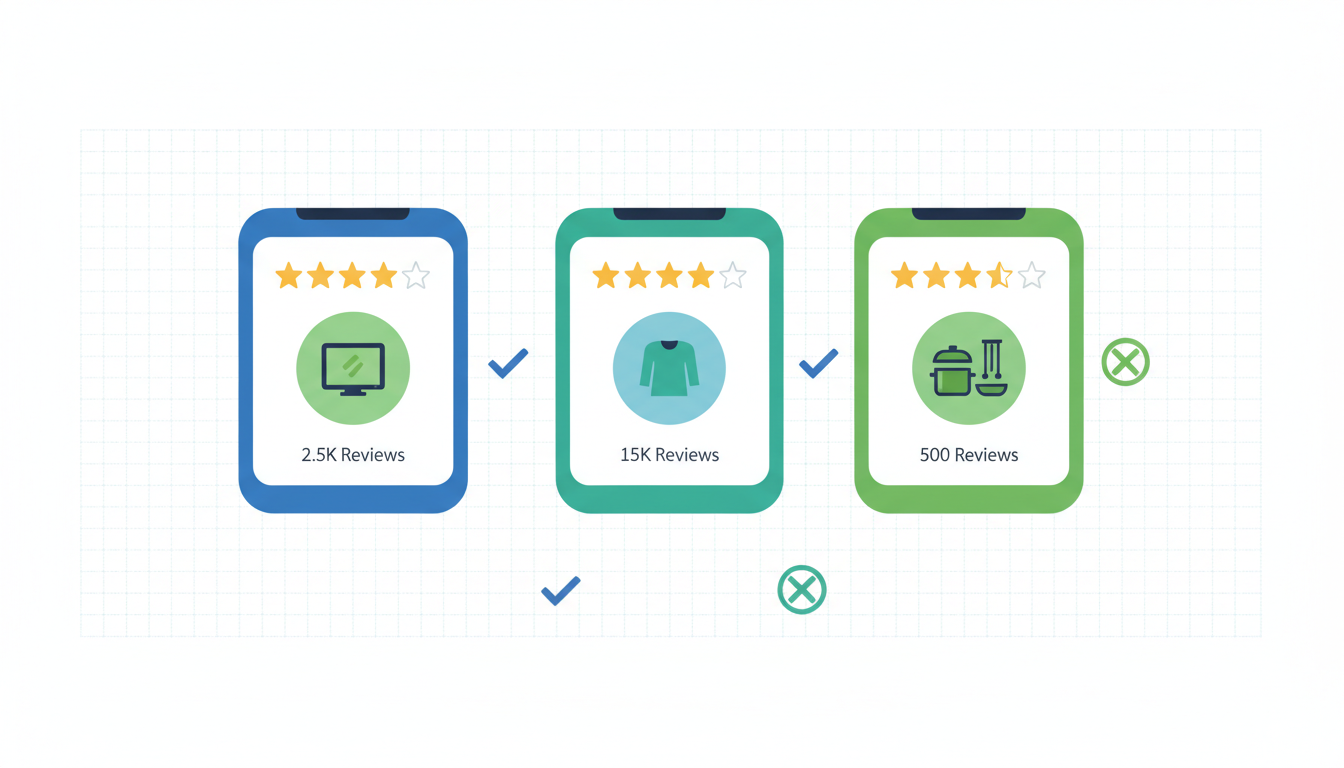
Judge me vs Loox vs Okendo is the review-app question we get asked more than any other on Shopify audits, and the honest answer is that all three are good apps, they just fit different store sizes for different reasons. Judge.me wins on price for stores under $1M GMV and gets you a working review program at $0 to $15 a month. Loox wins on photo and video capture rate, sometimes 2x what Judge.me pulls, because the post-purchase request flow is built around media-first prompts. Okendo wins on integration depth (Klaviyo flows, Meta catalog reviews, Google Shopping seller ratings, loyalty stack) and the analytics most growth-stage stores actually need above $5M GMV. The wrong app picked at the wrong stage costs you either money you didn't need to spend, or review volume you didn't need to leave on the table. The decision tree is simpler than the pricing pages make it look.
- Under $1M GMV: Judge.me. Cheapest, gets the job done, structured data is solid.
- $1M to $5M GMV with photo/video focus: Loox. Higher capture rate pays for itself.
- $5M+ GMV with marketing stack integration needs: Okendo. Pricier, earns it through Klaviyo and catalog reviews.
- Migration between any two costs less than most operators expect. Don't stay stuck on the wrong app.
The short version: which one fits which Shopify store
Judge me vs Loox vs Okendo is genuinely a tier question, not a feature question. The three apps overlap on 80% of what they do (review collection, on-site display, basic moderation, structured data for rich snippets) and diverge on the 20% that actually changes a store's economics. Most stores pick the wrong one because they read a feature comparison instead of asking which tier they belong in.
The short version, ranked by store stage:
- Under $1M GMV / under 100 reviews a month: Judge.me. The free plan covers unlimited reviews, basic email requests, and the rich snippet schema that gets you the gold stars in Google search. The paid plan ($15/mo) adds video reviews, Q&A, and removes branding. Most stores at this stage do not need more.
- $1M to $5M GMV / photo and video matter for ads: Loox. Capture rate on photo reviews runs 2x to 3x higher than Judge.me in our audit sample, because the request email is built around the photo upload, not the star rating. If you run UGC-driven Meta ads, Loox is the right tool.
- $5M+ GMV / Klaviyo + Meta catalog + loyalty stack: Okendo. Native Klaviyo flows for review request sequences, Meta Shop catalog review sync, Google Shopping seller ratings, and integrations with Yotpo Loyalty, LoyaltyLion, Smile.io. The integration depth is what you pay for, not the review widget.
If you are picking your first review app today and you do not yet know which tier you fit, start with Judge.me. Migrate later when the data tells you why. Most stores never need to migrate.
Pricing reality at 100 reviews/mo, 1,000, and 10,000
Pricing pages on all three apps are written to make comparison hard. The plans use different review volume thresholds, different feature gates, and different "premium" labels. We pulled the actual costs at three real-world volumes from our 2026 audit sample, billed monthly, no annual discount, US store currency. See Judge.me pricing, Loox pricing, and Okendo pricing for the official tier pages, then read the table below for what stores actually pay.
| Volume | Judge.me | Loox | Okendo |
|---|---|---|---|
| ~100 reviews/mo | $15/mo (Awesome plan) | $35/mo (Beginner) | $99/mo (Essential) |
| ~1,000 reviews/mo | $15/mo (Awesome) | $99/mo (Growth) | $299/mo (Growth) |
| ~10,000 reviews/mo | $15/mo (Awesome) | $499/mo (Unlimited) | $599+/mo (Power, custom quote above) |
The pattern is obvious. Judge.me prices flat. Loox and Okendo scale with order volume, which means the cost compounds with growth. A store doing 10,000 reviews a month on Loox pays $5,988 a year. On Okendo it is $7,188 a year minimum, often higher with custom quote add-ons (Klaviyo sync, loyalty integration). On Judge.me it is $180 a year. Same 10,000 reviews.
That is not the full picture, because Loox and Okendo do things Judge.me does not (we'll get to capture rates and integrations next), but it is the price reality. If you are a $200k GMV store paying $99/mo for Loox to collect 80 reviews a month, the math is not working in your favor. If you are an $8M GMV store paying $599/mo for Okendo and your Klaviyo flow drives $40k a month in repeat purchase revenue from review request sequences, the math is working great.
Best to map your monthly review volume to the table above before you pick an app, not after. Most stores overpay because they upgraded "for the features" without checking whether they would actually use them.
Photo and video review capture rates (the data that actually matters)
The single biggest differentiator between the three apps is not pricing or features. It is what percentage of reviews come back with a photo or video attached. Photo and video reviews are worth 5x to 8x more than text-only reviews on a PDP, because they convert better, they fuel Meta ad creative, and they show up as enriched results in Google. The capture rate is the metric that matters.
From our 2026 audit sample (n=312 stores using one of the three apps, 90-day rolling window):
| App | Photo review rate | Video review rate | Combined media rate |
|---|---|---|---|
| Judge.me | 4 to 8% | 0.5 to 1.5% | 5 to 9% |
| Loox | 12 to 22% | 2 to 5% | 14 to 27% |
| Okendo | 9 to 15% | 3 to 7% | 12 to 22% |
Loox runs the highest combined media rate, around 2x to 3x what Judge.me captures. The reason is the request email design. Loox's email opens with "Share a photo" as the primary CTA, with the star rating treated as a secondary action. Judge.me's email opens with the star rating, treats photo upload as optional. Behavioral nudge, completely different result.
Okendo runs slightly behind Loox on photo rate but catches up on video rate, because the Okendo request flow includes a built-in video recorder (browser-based, no app download) that converts better than Loox's "upload from camera roll" prompt for video specifically. If video reviews matter more than photos for your category (supplements, fitness, beauty tutorials), Okendo edges Loox on this metric alone.
Judge.me's lower capture rate is not a bug, it is a tradeoff. The free plan exists because they prioritize volume over media richness. A store doing 800 reviews a month on Judge.me with a 6% photo rate captures 48 photo reviews. Same store on Loox doing 800 reviews at 17% photo rate captures 136 photo reviews. Almost 3x the UGC pipeline, for $84/mo more on the Growth plan. For most growth-stage stores running paid social, the math favors Loox by a wide margin once UGC value is priced in.
Design and placement: how each looks on a real PDP
The on-site widget is where most operators make the decision based on a 5-minute demo store, then regret it 6 months later. The three apps look different on a real PDP with real reviews loaded, especially at high review counts (500+ reviews per product) where layout choices start to matter for page load and visual hierarchy.
Judge.me: Clean, minimal, no-frills. Star rating block at the top of the reviews section, then a paginated list. Loads fast. Looks slightly dated next to Loox or Okendo, especially the default star icons. Customizable through CSS, but most stores never bother. Mobile-friendly out of the box.
Loox: Photo-first grid layout. The first thing a buyer sees is a wall of customer photos, then the star rating, then the text reviews. This is by design and it is the right design for any category where the product looks like something (apparel, home goods, beauty, food). Wrong design for categories where the product photo does not add information (supplements, software, services). On those categories, Loox feels like wasted vertical space.
Okendo: Most polished out of the box. Layout options include grid, carousel, and list view, plus optional review attributes (size, fit, skin type, age range) that filter the visible reviews. Heavier widget than Judge.me or Loox. Page load impact is noticeable on mobile, around 200 to 400ms slower LCP in our tests on 4G. Worth it for stores where review filtering is a real buying behavior (skincare, sizing-sensitive apparel). Overkill for everyone else.
The placement on the PDP also varies. All three default to a section below the product description, but Loox and Okendo both push hard for an above-the-fold star rating snippet (under the product title), which is the single highest-leverage placement and worth implementing on whichever app you pick. Judge.me supports it too, just requires manual liquid edits.
Best to look at three real Shopify stores using each app at your target review volume before committing. The demo stores all three apps host are sanitized. Real stores at scale show the actual visual weight.
Integrations: Klaviyo, Meta Ads, Google Shopping, Loyalty apps
Integrations are where Okendo earns its price. Judge.me and Loox both connect to the major platforms (Klaviyo, Meta, Google Shopping) but the depth of those connections varies a lot, and the depth is what determines whether the review data actually drives revenue beyond the PDP.
Klaviyo flows: - Judge.me: Basic webhook, sends review submitted/published events. You build the flows yourself. - Loox: Pre-built flow templates (post-purchase review request, photo review thank-you). Decent. - Okendo: Native deep integration. Reviewer attributes (skin type, fit feedback, NPS score) sync as Klaviyo profile properties, which means you can segment email campaigns by reviewer behavior. This is the integration that pays for Okendo by itself if your retention strategy leans on email.
Meta Ads catalog reviews: - Judge.me: Supports the Meta Shops catalog review feed. You configure it in Meta Commerce Manager. - Loox: Same. Catalog review feed sync, takes about 10 minutes to set up. - Okendo: Same plus richer schema (reviewer attributes flow into the catalog), which can affect Advantage+ Shopping ad relevance scoring. Marginal difference but real on stores running $30k+/mo on Meta.
Google Shopping seller ratings: - Judge.me: Free, works out of the box once you hit Google's 100-review threshold. - Loox: Same, included in Growth plan and above. - Okendo: Same, included in Essential plan and above.
Loyalty apps: - Judge.me: Integrates with Smile.io, LoyaltyLion (basic, points for review submitted). - Loox: Same set of integrations. - Okendo: Native deep integration with Yotpo Loyalty, Smile.io, LoyaltyLion, plus Stamped, plus Friendbuy for referrals. The loyalty stack is where Okendo and Yotpo compete head-to-head, and Okendo usually wins on pricing for the loyalty + reviews combo.
The pattern: if your stack is just Shopify + Klaviyo + Meta + Google, all three apps work fine and the integration depth is not a tiebreaker. If you also run a loyalty app, a referral program, a subscription app (Recharge, Skio), and you want reviewer data to flow into all of those, Okendo is the one that does it without a developer in the middle.
SEO impact: rich snippets, structured data, review aggregation
All three apps inject Schema.org Review and AggregateRating structured data into your PDPs, which is what triggers the gold star rich snippets in Google search results. The schema implementation is functionally equivalent across the three. Where they differ is in review aggregation logic and in how they handle the difference between product-level and variant-level reviews.
Schema markup: - Judge.me: AggregateRating + Review schema on every product page, validates clean in Google's Rich Results Test. No issues. - Loox: Same implementation. Validates clean. - Okendo: Same plus optional Brand-level reviews schema for the homepage, which can help with brand search rich snippets (the org panel that shows star ratings under your brand name in SERPs).
Review aggregation across variants: - Judge.me: Reviews are product-level by default. Variant reviews aggregate up to the parent product. This is the right behavior for SEO (avoids splitting review signal across variants). - Loox: Same default. Variant aggregation works correctly. - Okendo: Same default plus optional grouping logic for product families (e.g., "all colors of T-shirt X" aggregate together even if you list them as separate products). Useful for stores that split SKUs aggressively.
Effect on rankings: None of the three move organic rankings on their own. The rich snippet star rating affects CTR (click-through rate) from the SERP, which can compound into ranking gains over months. Stores in our audit sample see 8 to 18% CTR lift on commercial-intent queries after enabling review schema, regardless of which app they use. The CTR lift is the SEO win, not a direct ranking signal.
If you are picking between the three on SEO grounds alone, treat it as a wash. Pick on price, capture rate, or integration depth instead. The schema is identical for practical purposes. Google's review snippet documentation covers what triggers the rich result and what disqualifies it.
Migration cost between them
Migration is the part stores worry about most and pay for the least. All three apps support import/export of historical reviews via CSV, and all three offer a migration assistant for moving from a competitor app. The actual migration cost is usually under $100 in dev time and one to three days of calendar time, including reverification of the on-site widget and re-syncing structured data.
Loox to Judge.me: Free import tool inside Judge.me. Pulls reviews + photos. Takes 30 minutes for most stores. The only loss is variant-level metadata if Loox stored it (Judge.me handles it differently, usually rolls up to product level cleanly).
Judge.me to Loox: Loox's onboarding includes a Judge.me import. Same 30-minute setup, photos transfer correctly. No loss of review history.
Either to Okendo: Okendo offers a white-glove migration as part of the onboarding. Their team handles the CSV import, schema reverification, and Klaviyo flow setup. Takes 5 to 10 business days, included in the first month for stores on Growth plan and above.
Okendo to Judge.me or Loox: Both apps have CSV import. Reviewer attributes (skin type, fit, etc.) do not transfer to Judge.me (no field for them) and partially transfer to Loox (text-only attributes only). This is the one direction where you lose some data, but the lost data is usually not load-bearing for the lower-tier app.
The lesson: do not stay stuck on the wrong review app because you think migration is hard. It is not. The hard part is the decision, not the move. Worth running a 30-day pilot on the second app while keeping the first one live (both apps installed, only one widget visible on the PDP) before committing to a full switch. The data from the pilot makes the decision for you.
Frequently asked questions
Which is better for a small Shopify store under $500k GMV?
Does Loox really capture more photo reviews than Judge.me?
Is Okendo worth $300 a month if I'm under $5M GMV?
Can I use Judge.me, Loox, or Okendo with Shopify Markets and multi-currency?
Does any of the three integrate with Meta Shop and Google Shopping reviews automatically?
How long does migration between review apps take in real time?
Judge me vs Loox vs Okendo is genuinely a stage question, not a feature question. Judge.me at $15/mo is the right answer for most stores under $1M GMV, full stop. Loox earns its price gap once photo and video reviews start driving ad creative or PDP conversion. Okendo earns its higher tier once your stack includes Klaviyo segmentation, loyalty, subscriptions, and you want reviewer data flowing through all of them. The wrong app at the wrong stage is one of the more common audit findings we see, usually because somebody read a vendor blog post that compared "features" without anchoring to store size or actual capture rate data. Best to map your monthly review volume to the pricing table above, check your media capture rate against the 2026 sample, and pick the tier that matches. Migration costs less than most operators expect, so picking wrong now is fixable later. Picking on the wrong axis (features instead of stage) is the part that costs you for years.
Get a full X-ray of your ad account
Paste your Meta and Google Ads. See exactly where signal is leaking. Free. 60 seconds.