Klaviyo vs Omnisend for Shopify: which to pick in 2026
 By Dror Aharon
·
CEO, COREPPC
·
Updated April 17, 2026
·
11 min read
By Dror Aharon
·
CEO, COREPPC
·
Updated April 17, 2026
·
11 min read
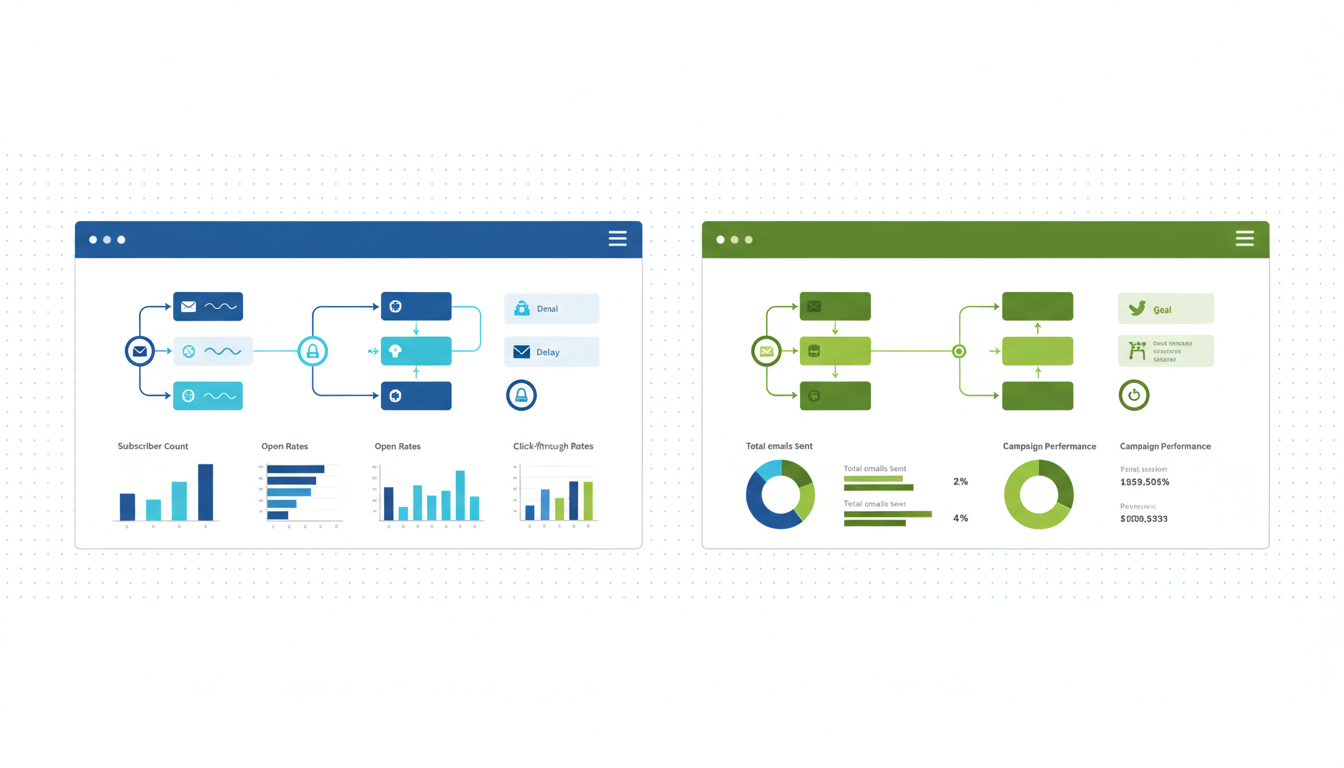
Klaviyo vs Omnisend on Shopify is the comparison most operators run at exactly the wrong moment, usually right after a price hike notice, and almost always with the wrong inputs. The honest answer in 2026 is that Klaviyo wins on segmentation depth, flow logic, and CDP-grade data, while Omnisend wins on plug-and-play setup, predictable pricing past 50k subscribers, and built-in SMS without a separate vendor. Both integrate with Shopify cleanly enough that integration is no longer the deciding factor. What actually decides it is your AOV, your sender list size, whether you have a flow builder on staff, and whether you plan to layer on a CDP, a reviews app, or post-purchase upsell logic. We have migrated stores in both directions in 2025 and 2026. Picking wrong costs roughly $4k to $12k in switching cost and 4 to 6 weeks of flow rebuild. Best to pick once, with the right slice.
- Klaviyo wins for stores above $2M GMV with deep segmentation needs and CDP ambitions.
- Omnisend wins for stores below $1M GMV that need fast setup, built-in SMS, and predictable cost.
- Pricing math flips around 50k subscribers, where Omnisend gets significantly cheaper than Klaviyo.
- Migration costs roughly $4k to $12k and 4 weeks of flow rebuild. Pick once, build right.
The short version: which one fits which Shopify store
Klaviyo vs Omnisend Shopify decisions get made on vibes more often than on data, which is why so many stores end up paying for the wrong tool for two years before somebody finally runs the math. The short answer up front, before the feature comparison, is this: there is no universally better platform. There is a better platform for your specific store, and the inputs that decide it are AOV, list size, segmentation complexity, and whether SMS is core or optional.
Klaviyo fits the store doing $2M+ GMV, with a list above 30k subscribers, running 8+ flows, segmenting on behavioral attributes (not just purchase history), and either using or planning to use the Klaviyo CDP. The flow builder is more powerful, the segmentation logic handles nested AND/OR conditions cleanly, and the integration with Shopify pulls more events natively. The cost is steeper learning curve, more expensive at scale, and an interface that overwhelms operators who only need 4 flows and a weekly newsletter.
Omnisend fits the store doing under $1M GMV, with a list under 30k, running 4 to 6 standard flows (welcome, abandoned cart, browse abandonment, post-purchase, win-back), and wanting SMS in the same tool without paying a separate Twilio bill or rebuilding flows in Klaviyo SMS. The setup is faster (most stores live in 2 days, not 2 weeks), the pricing scales more predictably past 50k subscribers, and the templates work out of the box without a designer. The cost is shallower segmentation, fewer reporting cuts, and weaker A/B testing.
The store sitting in the middle, $1M to $2M GMV with a 20k to 50k list, is where the decision gets genuinely hard. That is where the rest of this guide actually matters, because the wrong pick at that scale costs the most to undo.
Pricing math at 5k, 50k, and 500k subscribers
Pricing is where most Klaviyo or Omnisend Shopify comparisons fall apart, because both platforms publish complicated tier structures and most blog posts quote the wrong tier or the wrong feature inclusion. The numbers below are pulled from Klaviyo's pricing page and Omnisend's pricing page as of April 2026, for the email-only plan with unlimited sends (or the closest equivalent).
Monthly cost by list size, 2026:
| Subscribers | Klaviyo (Email) | Omnisend (Pro) | Klaviyo + SMS | Omnisend (incl. SMS credits) |
|---|---|---|---|---|
| 5,000 | $100 | $99 | $135 | $99 |
| 10,000 | $150 | $173 | $200 | $173 |
| 25,000 | $400 | $330 | $510 | $330 |
| 50,000 | $720 | $445 | $880 | $445 |
| 100,000 | $1,380 | $730 | $1,610 | $730 |
| 250,000 | $2,500 | $1,470 | $2,910 | $1,470 |
| 500,000 | $4,400 | $2,790 | $5,050 | $2,790 |
Two things jump out. First, Klaviyo and Omnisend are roughly even at 5k subscribers, then Omnisend pulls ahead starting around 25k and the gap widens fast. At 500k subscribers, Omnisend costs $2,790 a month and Klaviyo costs $4,400, a 58% premium for Klaviyo. Second, Omnisend's Pro plan includes an SMS credit allowance equal to the email plan price, so for stores doing meaningful SMS volume, the all-in cost difference is wider than it looks above. Klaviyo SMS is billed separately on a per-message rate of roughly $0.015 per US message, which at 50k SMS sends a month adds another $750 on top.
The pricing flip matters because it changes the breakeven on the migration math. Below 25k subscribers, the platforms cost about the same and the decision is purely about features and fit. Above 50k subscribers, Klaviyo is roughly $300 to $400 more per month than Omnisend, which means a 12-month migration payback only makes sense if you are leaving Klaviyo. Going the other direction, from Omnisend to Klaviyo at scale, you are paying a $4k to $5k annual premium for capabilities you have to actually use to justify the cost.
The trap to watch for: both platforms quote "starting at" prices that scale with active profiles, not just subscribers. If you have 30k subscribers but 80k active profiles (people who interacted in the last 365 days but did not subscribe), you pay for 80k. Most operators get the bill at month 3 and find out the hard way. Best to estimate your actual profile count before signing, not your subscriber count.
Feature-by-feature: segmentation, flows, SMS, reviews, CDP
The shopify email klaviyo vs omnisend feature comparison comes down to six categories that actually matter for daily operations. Most other "feature lists" pad out the count with checkboxes nobody uses (advanced spam filtering, custom domain authentication) that both platforms handle equally well. The six that matter:
| Feature | Klaviyo | Omnisend | Edge |
|---|---|---|---|
| Segmentation depth | Nested AND/OR, behavioral, predictive | Flat AND/OR, mostly purchase-based | Klaviyo |
| Flow builder UX | Powerful, steep learning curve | Simpler, drag-and-drop, fewer logic gates | Omnisend (for speed), Klaviyo (for power) |
| SMS native | Add-on, per-message billing | Built-in with credit allowance | Omnisend |
| A/B testing | 5 variants, statistical confidence reporting | 2 variants, simpler reporting | Klaviyo |
| CDP / customer data | Full Klaviyo CDP available, advanced | Basic profile management | Klaviyo |
| Reviews integration | Klaviyo Reviews built in (2024+) | Third-party only (Judge.me, Loox) | Klaviyo |
| Push notifications | Limited, mobile-first | Native web push included | Omnisend |
| Templates | Strong, designer-built | Strong, designer-built | Tie |
| Reporting depth | Cohort analysis, RFM, predictive LTV | Standard email metrics, revenue attribution | Klaviyo |
| Forms / popups | Robust, embedded + popup + flyout | Robust, embedded + popup + wheel-of-fortune | Tie |
Segmentation is where Klaviyo's lead is widest. If you want to send an email to "customers who bought product A in the last 90 days, but only if they have not opened an email in the last 14 days, and only if their predicted LTV is above $200," Klaviyo handles that in three clicks. Omnisend can do the first two conditions cleanly but the predicted LTV piece does not exist. For 80% of stores, that does not matter. For the 20% running serious lifecycle marketing, it matters a lot.
SMS is where Omnisend's lead is widest. SMS pricing on Klaviyo is genuinely confusing (per-message, per-segment, with surcharges for media messages) and the setup requires a separate carrier registration. Omnisend bundles SMS credits into the Pro plan, surfaces the cost per message clearly, and the same flow builder handles email and SMS steps interchangeably. For stores that want an abandoned cart sequence with email + SMS + email + SMS in one flow, Omnisend is genuinely 3 to 5 hours faster to build.
The reviews integration is the sleeper feature in 2026. Klaviyo Reviews launched in 2024 and now sits inside the same dashboard, which means review request emails, post-review flows, and review-based segmentation all live in one place. Stores using Klaviyo + Yotpo or Klaviyo + Judge.me can collapse two SaaS bills into one by switching to Klaviyo Reviews, which often closes most of the pricing gap above. Omnisend has no equivalent and you still need a third-party reviews app.
The operator experience: daily use, learning curve, support
Daily operator experience matters more than feature lists when you are the one logging in 4 times a week to schedule sends, troubleshoot a broken flow, or pull a report for the founder. On this dimension, the platforms diverge meaningfully and the gap shapes which one your team actually uses well.
Omnisend's interface is built for the operator who is also doing 8 other things. Most actions take 2 clicks. The flow builder uses straightforward conditional blocks. The reporting dashboard shows the metrics that matter (revenue, open rate, click rate, conversion) without burying them under filters. A new hire can ship their first campaign within a day of getting access. The trade-off is that when you outgrow the simple cases, the simpler interface becomes a constraint instead of a feature.
Klaviyo's interface is built for the operator who treats email as a craft. The segmentation builder is dense, the flow logic editor exposes every branching condition, and the reporting tab has 14 different cuts on the same campaign. A new hire needs about a week of dedicated training before they can ship without supervision, and most stores end up sending one person to Klaviyo Academy or hiring a Klaviyo specialist on retainer. The trade-off is that everything you might want to do is somewhere in the interface, and you almost never hit a ceiling.
Support quality is roughly even but the channels differ. Klaviyo has stronger documentation and a larger community of agencies and consultants you can hire. Omnisend has faster live chat response times (typically under 5 minutes during business hours) and the support team handles flow troubleshooting directly instead of passing you to docs. For a solo operator without an agency relationship, Omnisend's support feels significantly more accessible. For a brand with a marketing team, Klaviyo's documentation depth wins.
Best to be honest about who is actually going to use the tool day to day. The most expensive mistake we see in audits is a small team buying Klaviyo because "everyone uses it" and then never using more than 20% of the platform, paying $400 a month for capabilities sitting idle.
Shopify integration depth: the data flow differences
Both platforms install through the Shopify app store in 2 minutes and both pull standard order, customer, and product data on a real-time webhook. The integration depth differences are subtler and only matter once you start running advanced segmentation or post-purchase logic.
Klaviyo pulls more event types from Shopify natively. Out of the box you get: Placed Order, Ordered Product, Fulfilled Order, Refunded Order, Cancelled Order, Started Checkout, Active on Site, Viewed Product, Added to Cart, Updated Email Preferences, plus the full product catalog with metafields. Omnisend pulls: Placed Order, Started Checkout, Viewed Product, Added to Cart, Browse Abandonment, plus the basic product catalog. The difference matters most for refund-based segmentation (excluding refunded customers from review request flows) and metafield-based segmentation (segmenting on custom product tags).
Both platforms write back to Shopify cleanly: customer tags update on email engagement, profile properties sync to Shopify customer notes, and unsubscribes flow back to Shopify's marketing consent field. Klaviyo's two-way sync is more granular and supports more custom field mappings, but in practice 90% of stores never need that depth.
The omnisend klaviyo comparison shopify operators care about most is real-time event timing. Klaviyo events typically appear in the platform within 30 to 60 seconds of the action firing on Shopify. Omnisend runs closer to 2 to 3 minutes. For abandoned cart flows that fire 1 hour after cart abandonment, neither delay matters. For a "browsing high-intent product" trigger that wants to fire in 5 minutes, Klaviyo's faster sync wins.
For checkout extensibility (the new Shopify Checkout Extensibility framework that replaced Checkout.liquid in 2024), both platforms have certified Shopify Plus extensions, both work cleanly. No edge there as of 2026.
Migration: the 4-week reality of switching between them
Migration is where most "I'll just switch" decisions fall apart. The marketing copy on both platforms makes it sound like a 1-click import. The reality is 4 weeks of work for a store with even a moderately complex email setup, and roughly $4k to $12k in agency cost or 60 to 120 hours of internal time if you do it yourself.
Week 1: subscriber list export, segmentation audit, flow inventory. Most stores discover at this step that they have 14 flows live, 6 of which they forgot about, 3 of which are sending duplicate messages, and 2 of which were broken months ago. Cleaning that up before migrating is 80% of the value of doing the migration in the first place.
Week 2: rebuild flows in the new platform. Flow logic does not export between platforms cleanly. Even though both Klaviyo and Omnisend offer "import from competitor" tools, the tools rebuild flow shells and lose conditional logic, custom delays, and dynamic content blocks. Plan to rebuild every flow by hand. A simple welcome series takes 2 hours. A complex post-purchase sequence with 4 branches and dynamic product recommendations takes 6 to 8 hours.
Week 3: deliverability warmup. New sender domains start with no reputation. Sending 50k emails on day 1 from a fresh domain torches deliverability for months. Best to ramp from 5k sends to 50k sends over 7 to 10 days, monitoring spam complaint rate and inbox placement throughout. Stores that skip warmup typically see open rates drop 30% for 4 to 6 weeks before recovering.
Week 4: switch DNS, run both platforms in parallel for 7 days, validate revenue attribution, then turn off the old platform. Running parallel matters because email-attributed revenue numbers between platforms are calculated differently and the comparison reveals real differences in tracking accuracy. After 7 days you have enough data to confirm the new platform is reporting cleanly.
The cost split: agency-managed migration runs $4k for a small store (under 10 flows, under 25k subscribers) to $12k for a complex store (20+ flows, 100k+ subscribers, multi-language). DIY migration is technically free but realistically eats 60 to 120 hours of operator time, which at any reasonable hourly rate is more expensive than hiring an agency.
The honest math on whether migration is worth it: at the breakeven scale (around 50k subscribers), Omnisend saves roughly $300 a month vs Klaviyo, or $3,600 a year. A $6k migration pays back in 20 months. That is on the edge. Below that scale, do not migrate for cost reasons alone. Above that scale, the math gets cleaner. Capability-driven migration (you actually need Klaviyo's CDP, you actually need Omnisend's SMS) pays back faster because the new capability drives revenue, not just cost savings.
Edge cases and hybrid setups
A few edge cases come up often enough in audits to mention. None of them are the headline answer for most stores, but for the stores they apply to, they shape the decision.
Hybrid setups (Klaviyo for email, Omnisend for SMS, or vice versa) sound clever and almost never work in practice. The two platforms cannot share segments, cannot share flow triggers, and cannot dedupe sends, so a customer might get an email from Klaviyo and an SMS from Omnisend at the same moment for the same trigger. Pick one platform for both channels. The "we'll just use both for what each is best at" plan ends in duplicate messages and customer complaints within a quarter.
International stores (multi-currency, multi-language) tilt slightly toward Klaviyo because the dynamic content blocks handle language switching more cleanly inside templates. Omnisend supports multi-language but the workflow involves separate flows per language, which scales poorly above 3 languages.
Subscription stores (recurring billing through ReCharge or Bold Subscriptions) tilt toward Klaviyo because the subscription event integration is more mature and the segmentation on subscription state (active, paused, churned, upgraded) is more granular. Omnisend has subscription integrations but the event richness lags.
Headless Shopify storefronts (Hydrogen, Next.js, custom builds) work with both platforms via the Shopify Admin API webhooks, but Klaviyo's developer documentation is significantly better. If your dev team needs to fire custom events from a headless front-end, Klaviyo is faster to integrate.
Stores running paid-only acquisition with low organic email signups tilt toward Omnisend because the price scales better at smaller list sizes, and the simpler segmentation rarely becomes a constraint when the list is under 15k subscribers.
Frequently asked questions
Is Klaviyo or Omnisend better for a Shopify store doing $500k a year?
When does Klaviyo actually become worth the higher price?
Can I migrate from Klaviyo to Omnisend without losing my flows?
Does Omnisend or Klaviyo work better with Shopify Plus?
How does SMS pricing actually compare between the two?
Are there cases where neither Klaviyo nor Omnisend is the right pick?
Klaviyo vs Omnisend Shopify decisions deserve more than a feature checklist and a pricing screenshot. The honest answer depends on AOV, list size, segmentation needs, SMS volume, and who on the team actually opens the tool every day. Best to run the pricing math at your actual subscriber and profile count, audit your current flows for what you really use vs what is just sitting there, and pick the platform that matches your operational reality, not your aspirations. If you are below 25k subscribers and want SMS in the same place as email, Omnisend is the cleaner pick. If you are above 50k subscribers with a marketing team ready to build complex segmentation, Klaviyo earns its premium. The middle band is genuinely close, and the right call depends on team capability more than tool capability. Pick once, build right, and revisit only when the inputs (list size, AOV, team) change meaningfully.
Get a full X-ray of your ad account
Paste your Meta and Google Ads. See exactly where signal is leaking. Free. 60 seconds.