Recharge vs Bold Subscriptions on Shopify
 By Dror Aharon
·
CEO, COREPPC
·
Updated April 17, 2026
·
11 min read
By Dror Aharon
·
CEO, COREPPC
·
Updated April 17, 2026
·
11 min read
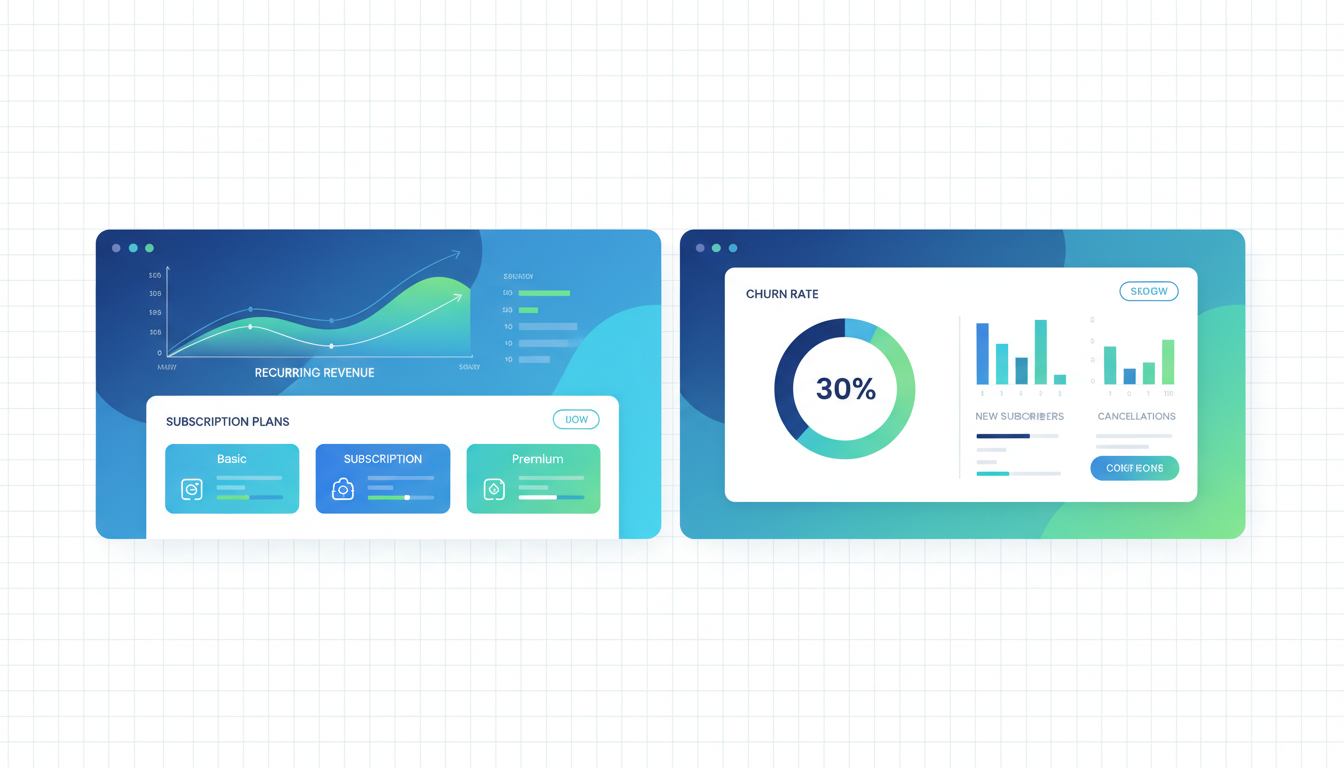
Recharge vs Bold on Shopify is the call most subscription brands make on a sales demo and regret 18 months later when the platform fee, transaction fee, and migration quote land on the same desk. The honest answer in 2026 is that Recharge wins on customer portal depth, integrations, and proven scale above 5,000 subscribers, while Bold wins on lower transaction fees, simpler pricing for refill-style products, and tighter native Shopify checkout integration on Plus stores. Both run on Shopify's subscription APIs now, so the old "checkout reroute" disadvantage that haunted Recharge until 2023 is gone. What actually decides this is your subscriber count, your AOV, whether you sell boxes or refills, and how much your retention depends on portal self-serve. Pick wrong at 1,000 subscribers and the migration to fix it costs $8k to $15k and 3 to 5 weeks of work. Best to pick once.
- Recharge fits subscription boxes, $30+ AOV, 5k+ subscribers, brands needing portal depth.
- Bold fits refill products, lower AOV, brands wanting predictable transaction fees.
- Pricing flips around 1,000 subscribers, where Bold gets cheaper than Recharge per order.
- Migration between them runs $8k to $15k and 3 to 5 weeks. Build right the first time.
The short version: which one fits which Shopify store
Recharge vs Bold subscriptions get picked on the strength of the sales demo, not the math, which is why so many brands end up paying for the wrong app right when their volume starts mattering. The short answer up front, before anyone touches a feature matrix, is this: there is no universally better subscription platform on Shopify. There is a better one for your specific product, AOV, and retention model.
Recharge fits the brand selling subscription boxes or curated assortments, AOV above $30, with 5,000 or more active subscribers, where customer self-serve in the portal is where the retention math lives. The portal is more powerful, the swap-product and skip-shipment flows handle edge cases cleanly, and the integrations with Klaviyo, Postscript, Gorgias, and the major reviews apps are battle-tested at scale. The cost is a higher monthly platform fee plus a transaction fee that adds up fast on lower AOV orders.
Bold Subscriptions fits the brand selling refills, replenishment products, or single-SKU recurring (coffee, supplements, pet food), AOV under $40, where the customer mostly wants the order to keep coming and rarely touches the portal. Bold's transaction fee structure is friendlier to high-frequency, lower-AOV orders, the native Shopify checkout integration runs cleaner on Plus, and the setup is faster (most brands live in 3 to 5 days, not 2 weeks). The cost is a thinner customer portal, fewer integrations, and a smaller agency ecosystem if you need help.
The brand sitting in the middle, 1,000 to 5,000 subscribers with AOV around $30 to $50 selling a mix of boxes and refills, is where the call gets genuinely hard. That is where the rest of this guide actually matters.
Pricing reality at 100, 1,000, 10,000 subscribers
Pricing is where most recharge shopify vs bold comparisons fall apart, because both apps publish a base monthly fee plus a transaction fee, and most blog posts quote one and forget the other. The numbers below are pulled from Recharge's pricing page and Bold's subscription pricing as of April 2026, for the standard plans on Shopify (not Shopify Plus, which runs on custom pricing for both).
Total monthly cost by subscriber count and AOV, 2026:
| Subscribers | AOV | Recharge Standard ($99 + 1.25% + $0.19/order) | Bold Subscriptions ($49 + 1% + $0.10/order) | Gap |
|---|---|---|---|---|
| 100 | $30 | $99 + $56.50 = $155.50 | $49 + $40 = $89 | Bold cheaper by $66.50 |
| 100 | $60 | $99 + $94 = $193 | $49 + $70 = $119 | Bold cheaper by $74 |
| 1,000 | $30 | $99 + $565 = $664 | $49 + $400 = $449 | Bold cheaper by $215 |
| 1,000 | $60 | $99 + $940 = $1,039 | $49 + $700 = $749 | Bold cheaper by $290 |
| 5,000 | $30 | $99 + $2,825 = $2,924 | $49 + $2,000 = $2,049 | Bold cheaper by $875 |
| 5,000 | $60 | $99 + $4,700 = $4,799 | $49 + $3,500 = $3,549 | Bold cheaper by $1,250 |
| 10,000 | $30 | $99 + $5,650 = $5,749 | $49 + $4,000 = $4,049 | Bold cheaper by $1,700 |
| 10,000 | $60 | $99 + $9,400 = $9,499 | $49 + $7,000 = $7,049 | Bold cheaper by $2,450 |
Two things jump out. First, Bold is meaningfully cheaper at every subscriber tier on raw cost, and the gap widens as volume scales. At 10,000 subscribers and $60 AOV, the annual difference is roughly $29,400. That is a real number for a growing DTC brand. Second, the transaction fee on Recharge (1.25% plus $0.19 per order) compounds on lower AOV products in a way most operators do not model when they sign. A coffee subscription at $24 per shipment is paying $0.49 in fees per order on Recharge versus $0.34 on Bold. Multiply that by 10,000 monthly orders and the gap is $1,500 a month from fees alone.
The trap to watch for: Recharge offers a "Pro" tier at $499 a month with a lower per-order fee structure, and the breakeven against Standard kicks in around 6,000 subscribers. If you are above that line, do not compare Standard pricing to Bold. Compare Pro pricing. The math gets tighter, but Bold still typically wins on raw cost.
The breakeven question matters because it changes the migration math later. If you are paying Recharge $5,000 a month for capabilities you actually use, the $1,700 a month gap to Bold is not really $1,700, it is $1,700 minus the cost of the capabilities Bold cannot replicate. That is the real comparison.
Customer portal and self-serve: where the retention math lives
Customer portal depth is the single most underweighted factor in subscription app comparisons, and it is where most of the long-term retention math sits. Subscription churn breaks down into three buckets: involuntary (failed payment), passive (forgot to cancel, kept the order), and active (logged in to cancel). The portal touches all three, and the differences between Recharge and Bold here are not subtle.
Recharge's portal handles, out of the box: skip a shipment, swap a product, change frequency, change next-order date, change quantity, change shipping address, pause for a defined period, cancel with retention offers, manage payment methods, and view order history with reorder. Each of these has a configurable surface (you can hide the cancel button, you can require a reason on cancel, you can offer a discount on the pause flow, you can A/B test which offers show on which exit reasons). The retention features alone (cancel deflection, dynamic offers, reasons capture) are why Recharge is the default pick for boxes where churn at month 3 is the make-or-break number.
Bold's portal handles: skip, swap, change frequency, change date, change quantity, change shipping, pause, cancel, manage payment, view orders. Same headline features. The depth differences sit in the configuration. Bold's cancel flow is simpler (one screen, no reasons capture by default, no dynamic offer engine). Bold's swap-product flow is more limited (works cleanly within the same product line, struggles with cross-line swaps in box-style subscriptions). Bold's pause flow is binary (paused or active) where Recharge supports defined pause periods with auto-resume.
For a refill brand selling coffee where the customer just wants to keep the bag coming, the simpler Bold portal is genuinely fine and possibly better (fewer buttons means fewer accidental cancellations). For a curated box brand where the customer wants to swap July's bath salt for a body scrub and skip August because they are traveling, Recharge's portal is the difference between a saved subscriber and a churned one.
The one area Bold has caught up meaningfully in 2026: the embedded portal experience. Bold's portal now embeds inside the Shopify customer account page natively, no separate login required, which removes a friction point that hurt Bold's retention numbers for years. Recharge's portal still uses a separate domain in most setups, though the new Shopify-native customer account integration is in beta. By end of 2026, this gap probably closes. As of today, Bold's embedded portal is a real advantage for brands where customer login friction is a known churn driver.
Shopify checkout integration depth
Both Recharge and Bold now run on Shopify's official subscription APIs, which means both go through Shopify's native checkout instead of rerouting to a custom domain. This is the change that ended the "Recharge breaks your checkout" complaint that dominated subscription app reviews from 2018 to 2022. As of 2026, both platforms support standard Shopify checkout, Shop Pay, Apple Pay, Google Pay, PayPal, and the new Checkout Extensibility framework that replaced Checkout.liquid in 2024.
Where the depth differs:
Recharge supports more checkout-level customization for subscription-specific fields (frequency selectors, prepaid term options, gift subscriptions) and has more mature Checkout Extensions for upsells inside the checkout flow itself. The trade-off is that the deeper customization sometimes requires custom dev work or a Recharge-certified partner, which adds setup cost.
Bold's checkout integration is tighter on Shopify Plus specifically, with native Shopify Functions for subscription discount logic and a cleaner integration with Shopify's built-in upsell apps. The trade-off is fewer subscription-specific checkout fields out of the box, which limits gift subscriptions and prepaid term flexibility.
For 90% of subscription stores, this difference does not matter. Both checkouts work, both convert at expected rates, both handle the major payment methods cleanly. The 10% it matters for: brands selling gift subscriptions at scale (Recharge wins), brands running prepaid annual plans with mid-term changes (Recharge wins), brands wanting deep upsell logic inside the checkout itself on Plus (Bold wins).
For technical depth on what's possible inside Shopify's subscription framework, the official Shopify Subscriptions API documentation covers the underlying capabilities both apps build on.
Subscription box vs refill vs membership: which app fits which
The shopify subscription app comparison most operators run skips the most useful filter: what kind of subscription you are actually selling. The three main models map to different platform strengths.
Subscription boxes (curated assortments, monthly themes, build-your-own flexibility): Recharge wins decisively. The portal handles swaps, the build-a-box logic is supported in the API, the third-party box-builder apps integrate cleanly, and the retention features handle the high-churn pattern boxes tend to see at month 3. Brands like Birchbox, FabFitFun, and most beauty box brands run on Recharge for these reasons. Bold can technically do boxes but the swap-product flow gets clunky above 4 SKU options.
Refill and replenishment (coffee, supplements, pet food, household products): Bold often wins on raw economics. Lower transaction fees compound on the lower AOV, the simpler portal matches what refill customers actually want (the order keeps coming, they rarely log in), and the embedded checkout experience reduces the cancellation friction that boxes need. Recharge handles refills fine, but the platform fee plus transaction structure is more expensive than necessary for the use case.
Membership and digital recurring (access fees, content subscriptions, services): Both platforms work, neither is purpose-built. Bold's flat fee structure is friendlier to digital products with no shipping. Recharge's prepaid logic is friendlier to annual membership terms. For digital-first membership, Shopify's native Subscriptions app (free, basic) is often enough. For tiered memberships with physical perks, Recharge's flexibility wins.
Hybrid models (box + refill upsell, membership + box, prepaid + monthly): This is where Recharge's depth pays back. The platform handles cross-product subscriptions, prepaid-to-monthly conversion logic, and tiered pricing better than Bold's simpler architecture. If your subscription model is genuinely complex, Recharge's platform fee buys you the flexibility to model it.
The honest test: write down what your customer actually does in the portal in a typical month. If the answer is "nothing, the order just shows up," Bold is probably enough. If the answer is "swap a product, skip a shipment, change frequency, add a one-time," Recharge is probably worth the premium.
Migration cost between them
Migration is where the "I'll just switch" decision falls apart. The marketing copy on both platforms suggests painless migration. The reality is 3 to 5 weeks of work and roughly $8k to $15k in agency cost or 80 to 160 hours of internal time for a brand with even moderate complexity.
Week 1: subscriber data export, plan audit, integration inventory. Most brands discover at this step that they have 8 active plan tiers, 4 of which are legacy and have one customer each, plus 12 integrations (Klaviyo, Postscript, Gorgias, reviews app, loyalty app, accounting sync, etc) that all need to be reconfigured against the new platform. Cleaning up the plan structure before migrating is 60% of the value of doing the migration in the first place.
Week 2: rebuild plans, products, and customer portal configuration in the new platform. Plans do not export cleanly between Recharge and Bold. Subscription product configuration, frequency options, prepaid terms, build-a-box logic, and discount rules all rebuild by hand. A simple single-SKU subscription takes 2 hours to set up in either platform. A complex box with 8 SKU swap options, 3 frequency tiers, a prepaid annual option, and a member discount layer takes 12 to 20 hours.
Week 3: subscriber migration. This is the hard part. Both Recharge and Bold accept CSV import of existing subscribers (subscription ID, customer email, product, frequency, next charge date, payment token), but payment tokens do not transfer between platforms in most cases because they are tied to the original payment processor record under the original platform. Most migrations require either (a) re-collecting payment authorization from every active subscriber via email (typical 60 to 80% authorization rate, so you lose 20 to 40% of your subscriber base in the move), or (b) using a payment vault provider like Spreedly to bridge the tokens, which adds setup cost and limits your processor options. There is no clean third option.
Week 4 to 5: validate the migration on a percentage of subscribers (move 100 customers first, run for 7 days, confirm orders fire correctly, charges process cleanly, portal access works), then migrate the rest in batches. Cut over the integrations (Klaviyo flow triggers, Postscript SMS, Gorgias customer data sync) one at a time, validating each. The full cutover typically lands in week 5.
The cost split: agency-managed migration runs $8k for a small brand (under 500 subscribers, 1 plan, 5 integrations) to $15k for a complex brand (5,000+ subscribers, multi-tier plans, build-a-box, 10+ integrations). DIY migration is technically free, realistically eats 80 to 160 hours of operator time, and has a meaningfully higher rate of subscriber loss because the payment re-authorization step is easier to mishandle.
The honest math on whether migration is worth it: if you are saving $1,700 a month on platform cost (the typical Recharge-to-Bold gap at 10,000 subscribers), a $12k migration pays back in 7 months. If you are losing 25% of subscribers in the payment re-authorization step, the lost LTV typically exceeds the platform savings for the next 18 to 24 months. Capability-driven migration (you are moving because the current platform genuinely cannot do what you need) pays back faster because the new capability drives revenue. Cost-only migration rarely pays back when you account for subscriber churn during the move.
Churn math and the features that actually move retention
Subscription business economics live or die on retention, and platform choice affects retention in ways that are easy to underweight on a sales demo. The features that actually move the churn number, ranked by impact in our audit data:
-
Failed payment recovery (smart retry logic, dunning emails, customer reauth flows): the single biggest lever. Both platforms offer this. Recharge's dunning sequence is more configurable (custom email templates, retry intervals, grace periods) and recovers about 35 to 45% of failed payments. Bold's dunning recovers about 28 to 35% in our audit sample. The 7 to 10 percentage point difference at scale is significant. On a 5,000 subscriber base with a 4% monthly involuntary churn rate, that gap saves roughly 14 to 20 subscribers per month.
-
Cancel deflection (offers, pauses, frequency changes presented at the cancel step): Recharge's cancel flow includes built-in deflection logic with A/B testable offers. Bold's cancel flow is simpler with limited deflection. For boxes with high voluntary churn at month 3, Recharge's deflection typically saves 8 to 15% of would-be cancellations.
-
Pause functionality with auto-resume: defined pause periods (3 weeks, 1 month) with automatic reactivation outperform indefinite pause for retention. Recharge supports defined pauses natively. Bold supports indefinite pause but defined-period pause requires custom work.
-
Skip-shipment flow accessibility: customers who can skip a shipment in 2 clicks are dramatically less likely to cancel than customers who have to log in, find the order, and figure out the skip option. Both platforms surface skip prominently, but Bold's embedded portal removes the login friction that Recharge's separate portal sometimes has.
-
Reactivation campaigns for churned subscribers: both platforms expose churned subscriber data via API, but the integration depth with Klaviyo and Postscript for reactivation flows is better on Recharge.
The composite effect: in our audit sample, brands that moved from Bold to Recharge specifically for the deflection and dunning features typically saw monthly involuntary churn drop from around 4% to around 3%, which on a 5,000-subscriber base preserves 50 subscribers per month. At a $40 AOV with a 12-month average lifetime, that is roughly $24,000 in preserved annual revenue. The math works at scale. It does not work at 500 subscribers, where the absolute savings are too small to justify the platform premium.
The reverse case: brands that moved from Recharge to Bold for cost reasons at 1,000 to 3,000 subscribers, where the deflection features were not being actively used, typically saved $400 to $900 a month with no measurable retention impact. The features only matter if you actually use them. A team that never set up dynamic offers in Recharge is paying for capability sitting idle.
Best to be honest about which features your team will actually configure and use. The most expensive mistake we see is buying Recharge for the retention features and then never building out the deflection flows, paying $2,000 a month for a portal that is essentially being used as Bold with extra steps.
Frequently asked questions
Is Recharge or Bold better for a brand under 500 subscribers?
Can I migrate from Recharge to Bold without losing subscribers?
Does Bold work with Shopify's subscription APIs natively?
What is the real cost difference at 5,000 subscribers?
Which platform handles build-a-box subscriptions better?
Should I use Shopify's native Subscriptions app instead of either?
Recharge vs Bold subscriptions is one of those calls that looks like a feature comparison and is actually a bet on which retention features your team will actively use over the next 18 months. Run the pricing math at your real subscriber count and AOV, audit which portal features your customers actually touch (skip, swap, pause, frequency change), and model the migration cost honestly including the subscriber loss from payment re-authorization. If you are below 1,000 subscribers selling refills with a simple plan, Bold is the cleaner pick and ships in days. If you are above 5,000 subscribers selling boxes with active deflection campaigns, Recharge earns its premium. The middle band is where the call gets interesting, and the right answer depends more on team capability than on the platforms themselves. Build right the first time, because the migration to fix the wrong choice is genuinely expensive and you lose subscribers on the way through.
Get a full X-ray of your ad account
Paste your Meta and Google Ads. See exactly where signal is leaking. Free. 60 seconds.