Demand Gen campaigns on Google Ads for Shopify
 By Dror Aharon
·
CEO, COREPPC
·
Updated April 17, 2026
·
11 min read
By Dror Aharon
·
CEO, COREPPC
·
Updated April 17, 2026
·
11 min read
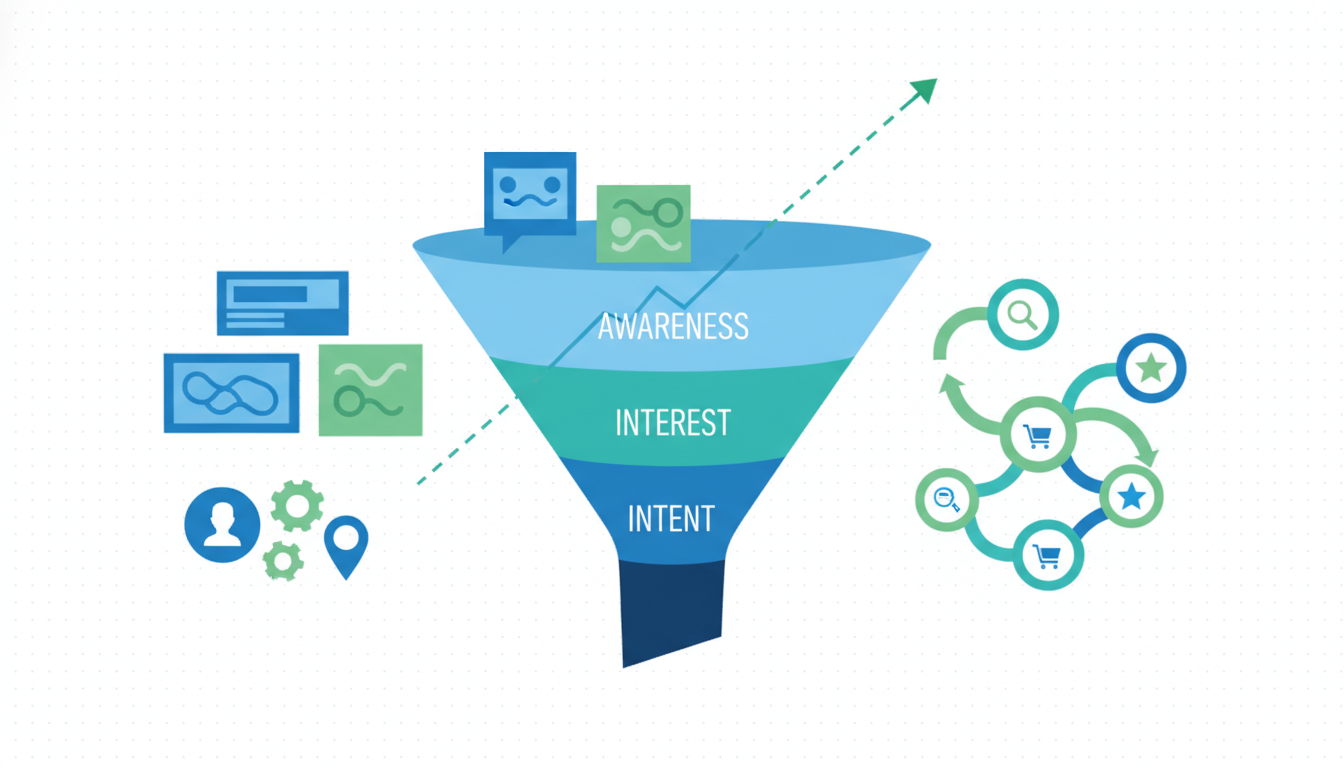
Shopify Demand Gen campaigns are where most Shopify stores quietly lose the prospecting half of their Google Ads budget in 2026, and nobody tells them until blended ROAS has been soft for a quarter. Demand Gen replaced Discovery Ads in April 2024 and added YouTube Shorts and in-stream placements, so the surface area is bigger and the creative bar is higher. Most operators still run it like old Discovery, with three static images and a wish, and then wonder why the campaign never leaves the learning phase. The stores running Demand Gen well on Shopify are feeding it 15 plus image assets per ad group, mixing short-form video, and pairing it with PMax instead of fighting it. Below $5k a month in Demand Gen spend it will not learn at all. Above $10k with the right creative ratio it finally pulls its weight.
- Feed 15 plus image assets and at least 3 short-form videos per ad group.
- Pick one of Google's 3 audience types. Lookalikes first. Interest signals last.
- Set a floor of $150 a day minimum. Below that the algorithm never leaves learning.
- Measure Demand Gen on assisted conversions and new-customer rate, not last click.
What Demand Gen replaced and what Google actually built
Demand Gen is Google's replacement for Discovery Ads, rolled out in April 2024 across all accounts (see Google's Demand Gen overview for the official scope). Discovery Ads used to run on the Discover feed, Gmail promotions tab, and the YouTube home feed. That was it. Demand Gen kept those placements and added YouTube Shorts, YouTube in-stream, and the YouTube watch feed, so the total inventory roughly tripled overnight. The creative formats expanded too. You can now run short-form video ads that look native inside Shorts, carousel image ads that swipe inside the Discover feed, and product feed ads that pull straight from Merchant Center, same as a shopping campaign.
The strategic pitch from Google is that Demand Gen is the social-style prospecting layer on Google Ads. The placements skew toward discovery and browsing moments, not active search, so the intent is lower but the reach is bigger. That part is real. What Google does not tell you is that most Shopify stores run Demand Gen like it is Discovery with extra steps and then blame the campaign type when it underperforms. The failure is almost always creative volume and audience mismatch, not the placements themselves.
The short version: Demand Gen on Shopify is a prospecting campaign, not a remarketing one. Running it as remarketing is the most common structural mistake we see. Remarketing belongs in PMax (audience signals layer) or in a dedicated retargeting campaign with a smaller budget. Demand Gen should be finding net-new people who have never interacted with the brand. We audit around 40 Shopify stores a month since 2023 and about 6 in 10 have Demand Gen running as a retargeting campaign by accident, which is why the ROAS looks decent (it is eating branded traffic) but the new-customer rate never moves.
Demand Gen vs PMax: when each wins
The demand gen vs pmax shopify question is not "which is better." It is "which campaign covers which part of the funnel." PMax is search and shopping and display and YouTube, all fused into one auction with the algorithm deciding the mix. Demand Gen is pure upper-funnel discovery, no search at all, no shopping grid placements, tight creative control. They do different jobs and most stores above $30k a month in Google spend should run both.
The decision framework:
- Use PMax when: you need shopping coverage, branded search defense is in place, the feed scorecard is above 140, and you want Google to handle the placement mix automatically. PMax is your scale amplifier once unit economics are proven.
- Use Demand Gen when: you have strong visual creative (at least 15 images, 3 short-form videos), you want to drive net-new customer acquisition at scale, and you can commit at least $150 a day so the algorithm can learn.
- Run both when: monthly Google spend is above $30k, new-customer rate needs to climb, and you want PMax handling conversion-intent traffic while Demand Gen seeds top of funnel. This is the structure that actually lifts blended ROAS over a 90 day window.
What most google demand gen shopify writeups miss is the spend split. PMax should still carry 60 to 75% of the Google budget on a mature Shopify account because it owns shopping and high-intent search. Demand Gen gets 15 to 25%. Search brand and non-brand carry the rest. Flipping the ratio so Demand Gen gets 40%+ of budget on a store that has not yet saturated PMax is a mistake. PMax is where the efficient conversions live. Demand Gen is where the next batch of customers comes from.
CPA comparison from our audit sample (median across 22 Shopify stores running both, Q4 2025):
- PMax (feed score 140+): $22 CPA, 3.8x ROAS, strong on conversion intent, weak on new-customer rate.
- Demand Gen (15+ assets, $150/day floor): $38 CPA, 2.4x ROAS last-click, 3.1x ROAS with 7-day assisted.
- Demand Gen (under 10 assets, $50/day): $71 CPA, 1.2x ROAS, never leaves learning.
The creative and budget thresholds matter more than the campaign type itself. A well-fed Demand Gen campaign runs at 2.4x last-click ROAS, which looks soft until you add the assisted conversions it seeds for PMax and Search. A starved Demand Gen campaign runs at 1.2x and just burns budget, full stop.
Creative requirements: the ratio that learning needs
Demand Gen is a creative-heavy campaign type. Google's Demand Gen creative specifications list the minimums, but "minimum" in Google's docs means "this campaign will not perform" in practice. The real ratio you need per ad group, based on audit data across stores actually running Demand Gen profitably:
- Image assets: 15 minimum, 20 ideal. Mix of product-on-white (5), lifestyle (5), UGC-style (5), and any seasonal or campaign-specific (5). Square 1:1 and vertical 9:16 both required.
- Short-form video: 3 minimum, 5 ideal. 15 to 30 seconds, vertical 9:16, hook in the first 3 seconds. This is the Shorts placement, which is growing fastest and has the cheapest CPMs in Demand Gen right now.
- Long-form video: 1 to 2 assets, 30 to 60 seconds, 16:9 or 9:16. Feeds YouTube in-stream and watch feed placements. Optional but lifts reach around 20%.
- Carousel: 3 to 5 image sets of 3 to 5 images each. Swipe-native format for the Discover feed. Lets you tell a product story or show before/after.
- Headlines: 5 minimum per ad group, 10 ideal. Keep them under 40 characters, benefit-led, avoid the product name alone.
- Descriptions: 5 minimum, 10 ideal. 60 to 90 characters, one concrete benefit, one soft CTA.
Stores running Demand Gen with fewer than 10 image assets or zero video rarely leave learning phase. The campaign needs variety to test, and Google's algorithm rates each asset Low, Good, or Best after about 2,000 impressions. Replace Low-rated assets within 10 days. Best-rated assets get cloned into other ad groups.
The creative mix that works in 2026 is heavier on UGC-style and short-form video than old Discovery ever was. The Shorts placement alone is something like 30 to 40% of total Demand Gen impressions on most Shopify accounts now, and Shorts creative has to look native. Polished brand-shoot imagery underperforms scrappy-looking UGC in Shorts by around 2x on CTR. This is the single biggest tactical shift from Discovery to Demand Gen and most guides have not caught up.
Best to build the creative library before you launch the campaign. Trying to build assets in-flight after the campaign is already burning $200 a day is how stores end up with 8 images and a hope.
Audience targeting: Google's 3 options
Demand Gen gives you 3 audience options, and picking the wrong one is the second-most common failure mode we see after creative volume. The options, ranked by what actually works on Shopify:
- Lookalike segments: Built from your customer list or website visitors. These are the strongest signal in Demand Gen. A 1% lookalike of your past 180-day purchasers on a Shopify store typically pulls a CPA about 35% lower than interest-based targeting. Requires at least 1,000 seed customers uploaded to Google Ads via the Customer Match tool. If you have the list, use it.
- Custom segments: Keyword and URL-based audiences you define. List competitor URLs, category keywords, or specific intent signals. Medium strength. Useful as a secondary signal when the lookalike audience is too small or you want to expand into adjacent verticals.
- Interest and affinity audiences: Google's pre-built taxonomies. "Fashionistas", "Home and garden enthusiasts", and so on. Weakest signal. These are broad enough to work as a ceiling exhaust once the stronger audiences saturate, but should never be the primary targeting on a new campaign.
The stack we use on Shopify stores running Demand Gen:
- Ad group 1: 1% lookalike of past purchasers. 50% of budget. Strongest conversion signal.
- Ad group 2: 1 to 3% lookalike of high-value cart adds (past 30 days). 25% of budget. Mid-funnel warm audience.
- Ad group 3: Custom segment built from competitor URLs and category keywords. 15% of budget. Conquest layer.
- Ad group 4: Interest-based broad. 10% of budget. Discovery ceiling, only add once 1-3 are saturated.
Google's Customer Match documentation covers the seed list upload. The match rate for a clean Shopify customer list is usually 60 to 75%, so a 1,500 customer seed lands you around 1,000 matched users, which is the floor for lookalike modeling. Below 1,000 matched seeds, the lookalike does not build properly and you are back to interest targeting, which is why some stores run Demand Gen for three months and never break 1.5x ROAS.
Discovery ads shopify was audience-light in a way that actually worked, because Google targeted users based on intent signals inside the Discover feed itself. Demand Gen is audience-heavy by comparison, and the audience you pick decides 40 to 50% of the outcome before the creative even runs.
Placements: Discover, YouTube Shorts, Gmail
Demand Gen runs on 5 primary placements and you mostly cannot pick and choose between them. Google decides the mix. What you can do is understand the rough shape of the inventory so you build creative that fits the dominant surfaces. The placement split we see on Shopify accounts in Q1 2026:
- YouTube Shorts: 30 to 40% of impressions. Vertical 9:16 short video, 15 to 30 seconds, needs a hook in the first 3 seconds. Cheapest CPMs right now because supply is outpacing demand. This is where most of the scale is going in 2026.
- YouTube in-stream and watch feed: 20 to 30% of impressions. 16:9 or 9:16 video, 30 to 60 seconds. Higher CPMs than Shorts but longer dwell time, so brand recall lifts.
- Discover feed: 20 to 25% of impressions. Native card format in the Google app Discover surface. Square and vertical images, swipeable carousels. Works best for product-led creative with a strong opening image.
- Gmail promotions tab: 10 to 15% of impressions. Expanded native ad in the promotions tab. Lower intent, but useful for brand exposure on logged-in Google users.
- YouTube home feed: 5 to 10% of impressions. Legacy Discovery placement, smaller but still present. Same creative specs as in-stream.
The placements you cannot exclude individually inside Demand Gen, which is a real constraint operators complain about. What you can do is withhold the creative formats Google needs to serve on a given placement. If you never upload vertical short video, you suppress Shorts serving entirely. If you never upload carousel, you suppress the Discover carousel format. This is backdoor placement control, and it works, but it also means you are leaving the cheapest inventory (Shorts) unclaimed if you skip short-form video.
The tactical implication: if Shorts is 30 to 40% of impressions and has the cheapest CPMs, not running Shorts creative is probably the single most expensive mistake a Shopify brand can make in Demand Gen right now. Even imperfect UGC-style Shorts outperform polished brand-shoot imagery in that placement.
Budget floor and what happens below it
Demand Gen has a real learning-phase problem below a certain daily budget, and nobody in Google's official docs says it out loud. The rule of thumb from our audit data:
- Below $50 a day: the campaign never leaves learning. Do not run Demand Gen at this budget, it will just burn $1,500 a month and nothing else.
- $50 to $150 a day: learning phase lasts 3 to 6 weeks, sometimes does not complete at all. Viable only if you have patience and the creative library is already strong.
- $150 to $300 a day: learning completes in 2 to 3 weeks, ROAS stabilizes around week 4. This is the practical floor for running Demand Gen on a Shopify store.
- $300+ a day: learning completes in 10 to 14 days. This is the zone where Demand Gen starts pulling its weight.
The learning-phase math on Demand Gen is harsher than on Search or even PMax because the audiences are broader and the creative space is bigger. Google needs around 50 conversions per ad group to optimize, same as other smart bidding campaigns. At a $38 CPA, 50 conversions per ad group costs $1,900. Spread across 4 ad groups, that is $7,600 in learning spend before the campaign is actually running on optimized delivery. At $50 a day you get to that number in 152 days, which is not a campaign, it is a science experiment.
Most stores that "tested Demand Gen and it didn't work" had budgets under $100 a day and gave it 30 days. The campaign was in learning the entire time they were measuring it. The ones that made it work committed $200 a day for 6 weeks, let learning complete, and then made decisions on week 6 data instead of week 2 data. The cheap-to-test framing does not apply to Demand Gen the way it applies to a small Search campaign. Best to go in with enough budget to actually finish learning, or not run it at all.
Measuring Demand Gen beyond view-through
The biggest reporting trap in Demand Gen is using last-click ROAS to evaluate an upper-funnel campaign. Demand Gen is a prospecting campaign. Most of the customers it touches convert later, through a branded search or a direct visit. Judging it on last-click is like judging a social ad on direct-type-in URL visits. You will kill the campaign a week before it pays back.
The measurement framework we use on Shopify Demand Gen campaigns:
- Assisted conversions (7-day view-through + 30-day click): Pull this from Google Analytics 4 or the Google Ads "All conversions" column. Demand Gen usually shows 2 to 3x more assisted conversions than last-click. A 2.4x last-click ROAS often looks like 3.2 to 3.8x on assisted.
- New-customer rate: The percentage of Demand Gen conversions that are first-time buyers. This is the lens that matters for a prospecting campaign. If new-customer rate is below 60% on Demand Gen, the campaign is eating branded or remarketing traffic it should not be touching.
- Branded search lift: Track your branded search impression volume in Search Console or Google Ads brand campaign impressions. A healthy Demand Gen campaign lifts branded search by 10 to 20% within 60 days. If branded search is flat, Demand Gen is not actually building demand, just pulling from an existing pool.
- Blended ROAS over 90 days: The ultimate lens. Demand Gen should lift account-level blended ROAS within 60 to 90 days of hitting its spend floor, even if its own last-click ROAS looks soft. If blended ROAS is flat or dropping 90 days in, something is structurally wrong (usually creative or audience, rarely the campaign itself).
The most common self-inflicted wound on Demand Gen measurement is running it for 3 weeks, checking last-click ROAS, and pausing. Last-click on an upper-funnel campaign is almost never the right lens. Set up the 4 metrics above on day one, check weekly, and make the decision at day 60 not day 21. The stores that get Demand Gen working waited long enough to see the lift. The stores that decided it did not work usually did not.
Frequently asked questions
Is Demand Gen the same as Discovery Ads on Google?
How much should I spend on Demand Gen before deciding it works?
Should I run Demand Gen and PMax together on Shopify?
How many creative assets do I actually need in Demand Gen?
Can I use Demand Gen for remarketing on Shopify?
What is the best audience type for Demand Gen on a Shopify store?
Shopify Demand Gen campaigns are not a replacement for PMax and they are not a rebrand of Discovery Ads. They are a prospecting campaign with a real creative bar, a real budget floor, and a real audience model that decides most of the outcome. Feed the campaign 15 plus image assets and at least 3 short-form videos per ad group, set a minimum floor of $150 a day so learning can actually complete, pick lookalikes over interests every time, and measure on assisted conversions and new-customer rate instead of last-click ROAS. Best to run the creative library build before the campaign goes live, not after. If the creative library is under 10 assets or the budget is under $100 a day, do not launch Demand Gen yet. Fix the inputs first. The stores that got Demand Gen working in 2026 waited until the creative and budget were both in place, then let learning complete, then made decisions on week 6 data. The ones that gave up usually just did not feed the campaign enough to succeed.
Get a full X-ray of your ad account
Paste your Meta and Google Ads. See exactly where signal is leaking. Free. 60 seconds.