Google Ads budget for Shopify stores by revenue tier
 By Dror Aharon
·
CEO, COREPPC
·
Updated April 17, 2026
·
11 min read
By Dror Aharon
·
CEO, COREPPC
·
Updated April 17, 2026
·
11 min read
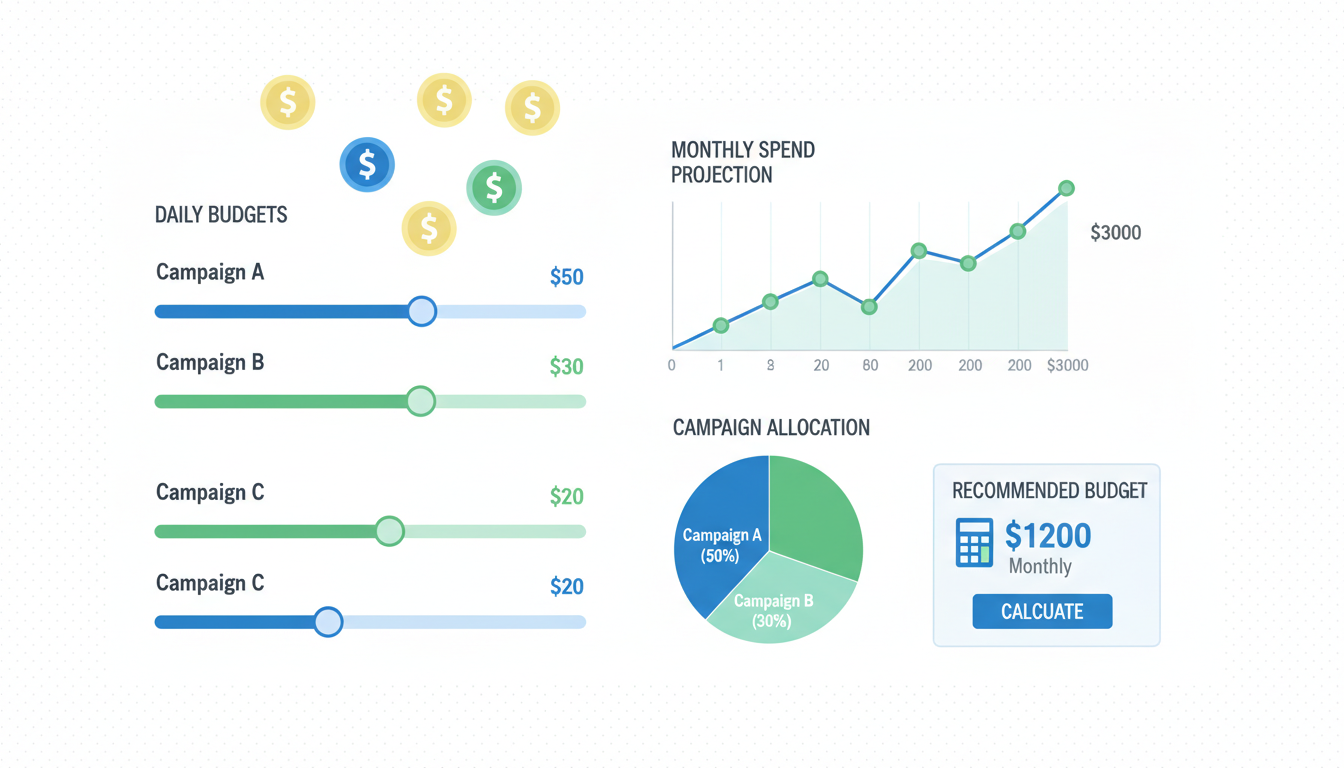
The Shopify Google Ads budget question is the one that quietly sinks more accounts than any other, because most operators set a number, copy a competitor's channel split, and then wonder six weeks later why blended ROAS is half of what Meta shows on the same store. Google Ads is not Meta. The auction is more expensive, the learning phases are longer, and PMax has a hard minimum below which it never stabilizes. The right budget is not a single number, it is a stack of line items per channel, scaled to the store's monthly revenue, with brand Search funded as its own protected slice. Get the tiers right and ROAS holds steady through scale. Get them wrong and every budget raise breaks the account again. The math below is from the 40 Shopify stores we audit a month, not theory.
- Brand Search is its own line item. Always. Never folded into a non-brand budget.
- PMax has a $3k/mo minimum viable budget below which it cannot exit learning.
- Channel split shifts hard at $15k/mo and again at $50k/mo. The same split breaks at scale.
- YouTube and Demand Gen earn a slice only after Search and PMax are both hitting target ROAS.
Why Google Ads budget on Shopify is different from Meta
The Shopify Google Ads budget question feels similar to Meta's, but the math underneath differs in three ways that decide whether the spend works or burns. First, the auction is denser. Most ecommerce verticals have 8 to 15 active Google Ads bidders on the same head terms, pushing CPCs 2 to 4x higher than equivalent Meta CPM at small scale. Second, Google's learning phases are longer. PMax needs around 30 conversions to stabilize, Search needs 50, and Smart Bidding restarts learning if you change targets by more than 15%. Third, Google has a brand vs non-brand split Meta does not have, because branded queries are a defensive line item that has to be funded separately or PMax eats it.
A store running $5k/mo on Meta with 4x ROAS will not get 4x ROAS on $5k/mo of Google spend, because $5k is below the threshold where Google's three core campaign types (Brand Search, non-brand Search, Shopping or PMax) can each get enough volume to stabilize. Three starved campaigns, none learning, all running at 1.8 to 2.2 ROAS while reported numbers swing weekly.
Google's official guide on setting an ad budget walks through the daily budget mechanic but skips what operators actually need: how budget should split across campaign types at different revenue tiers. That is what this guide covers, and it is the part competitor blogs leave out because the answer changes by tier, not by industry.
The Brand Search line item: fund it separately, always
Brand Search is the first line item in any Shopify google ads budget, and it has to live separately from non-brand Search and from PMax. Branded queries are intent the store already created. Conversion rate is usually 8 to 15%, CPC is low because nobody else should be bidding on your brand, and ROAS on a clean brand campaign sits at 8 to 15x. Fold it into non-brand or PMax and the algorithm sees that ROAS, decides the campaign is healthy, and shifts spend toward non-brand queries that perform much worse.
What "fund separately" means in practice:
- Dedicated Search campaign on exact-match brand keywords. No phrase, no broad.
- Its own daily budget. Floor it high enough that it never caps. If it caps midday, you lose branded clicks to organic and to competitors bidding on your name.
- Smart Bidding set to Maximize Conversion Value. No tROAS, because that throttles a campaign that should never throttle.
- Brand exclusions at account level so PMax does not bid on your branded queries.
The math: if brand search volume is 2,000 queries/mo and CPC is $0.80, the brand line item is around $1,600/mo. Non-negotiable. Below that, you leave money on the table. Above that, the budget will not spend because you cannot create more branded demand than exists. Brand Search is "fully fund the demand that exists," not "scale to whatever budget you have."
Two common audit failures. One: no brand campaign at all, so PMax pays $1.80 to $3 per branded click that should cost $0.65. Two: brand and non-brand mixed in one Search campaign, so average CPA looks decent but non-brand runs at 0.6 ROAS while brand carries it. Splitting them usually recovers 15 to 25% of total Google spend efficiency in the first week.
Budget tiers: under $3k, $3k-$15k, $15k-$50k, $50k+
The right google ads budget shopify framework is tier-based. The split that works at $5k breaks at $30k. The structure that works at $30k is overkill at $5k. Four tiers, with the split that holds at each.
Tier 1: Under $3k/mo total Google spend. Sub-scale for PMax. Below $3k, PMax cannot exit learning and the budget burns on exploration. Run Brand Search + Standard Shopping only. Recommended split: $800 brand Search, $2,000 Standard Shopping, $200 reserved for testing. Skip non-brand Search unless you have very high-margin SKUs that can support $4 to $8 CPCs. Skip PMax entirely. Skip YouTube.
Tier 2: $3k to $15k/mo. Where PMax becomes viable, but Standard Shopping still runs alongside it. Recommended split: $1,200 brand Search, $1,500 to $3,000 non-brand Search, $5,000 to $7,000 PMax, $1,500 to $2,500 Standard Shopping on the SKUs not in PMax. No YouTube yet. PMax has just enough budget to fail spectacularly if the feed is messy, so feed quality at this tier matters more than at any other.
Tier 3: $15k to $50k/mo. Channel mix shifts. PMax becomes the dominant line item, Standard Shopping usually gets retired, non-brand Search segments into branded-modifier and category campaigns, and YouTube earns a slice if the creative supports it. Recommended split: $2,500 brand Search, $5,000 to $10,000 non-brand Search, $15,000 to $25,000 PMax, $2,000 to $5,000 YouTube or Demand Gen, $1,000 reserved for new SKU testing. The risk is over-concentrating in PMax and losing visibility.
Tier 4: $50k/mo and up. Stop thinking about percentages, start thinking about line items per product margin tier and per intent stage. Brand Search fully funded ($5k to $15k/mo at this scale). Non-brand Search splits into 3 to 5 themed campaigns. PMax splits into 2 to 4 asset groups by margin. YouTube becomes meaningful if creative is strong (15 to 20% of budget). Demand Gen earns a 5 to 10% test slice. Standard Shopping disappears. Add a separate Display or Demand Gen retargeting slice (5 to 8%) for cart abandoners.
The trap at every tier is assuming the next tier's split works at the current tier. Stores at $8k/mo trying to follow a $40k/mo split end up with starved campaigns. Stores at $40k/mo running a tier-2 split under-fund PMax and leave growth on the table.
PMax minimum viable budget and what happens below it
PMax has a hard minimum viable budget. Around $3,000/mo, or roughly $100 a day. Below that, the campaign cannot generate enough conversions to exit learning, the algorithm never stabilizes, and the store burns spend on exploration. Most "PMax does not work for my store" complaints we see in audits trace back to running PMax at $30 to $60 a day, below the floor.
The math: PMax needs around 30 conversions before Smart Bidding stabilizes. If AOV is $80 and CPA target is $25, you need roughly $750 in conversion spend to hit the threshold. Add learning-phase exploration cost (Google typically spends 1.5 to 2x the stabilized rate during learning) and you need around $3,000 in the first month. Below that, the campaign sits in learning forever, CPAs swing 3 to 5x week to week, operators panic-throttle, learning restarts, problem compounds.
What happens at sub-minimum spend, in order:
- PMax starts in learning. CPA 2 to 3x target for the first 7 to 14 days. Normal.
- Without volume, learning never exits. Days 14 to 30, CPA stays high.
- Operator throttles budget 30 to 50% to "stop the bleeding." Learning restarts.
- Days 30 to 45, CPA stays high again. Operator pauses the campaign.
- Operator concludes "PMax does not work" and reverts to Standard Shopping at the same budget, which actually works because its minimum viable spend is much lower.
The fix is counterintuitive: if you cannot commit $3k/mo to PMax for 60 days, do not run PMax. Run Standard Shopping. PMax at $1,500/mo loses to Standard Shopping at $1,500/mo every time. Google's PMax documentation mentions the 30-conversion threshold but does not connect it to a budget floor, which is why so many stores miss it.
Search vs Shopping vs PMax split by revenue tier
The channel split shifts by revenue tier. The directional math below assumes brand Search is already fully funded as a separate slice and excluded from these percentages.
At $3k/mo non-brand budget: Non-brand Search 25% ($750), PMax 50% ($1,500, below minimum so consider Standard Shopping instead), Standard Shopping 25% ($750), no YouTube, no Demand Gen. If PMax is sub-minimum, shift its share to Standard Shopping (25% Search / 75% Shopping) until total non-brand clears $5k.
At $10k/mo non-brand budget: Non-brand Search 25% ($2,500, 2 to 3 themed campaigns), PMax 60% ($6,000, single campaign with 2 to 3 asset groups), Standard Shopping 10% ($1,000), YouTube 5% ($500, optional). Feed quality decides whether the 60% PMax slice works or burns. Feed scores below 100: drop PMax to 40% and bump Standard Shopping to 30% until the feed is fixed.
At $30k/mo non-brand budget: Non-brand Search 30% ($9,000, 4 to 6 themed campaigns), PMax 50% ($15,000, 2 to 3 separate campaigns by margin tier), YouTube 12% ($3,600), Demand Gen 5% ($1,500), Display retargeting 3% ($900). Standard Shopping drops out except for very long-tail catalogs (5,000+ SKUs). Brand Search sits beside this at $4k to $8k/mo.
At $80k/mo non-brand budget: Non-brand Search 30% ($24,000, 6 to 10 campaigns), PMax 45% ($36,000, 3 to 5 campaigns by margin and intent), YouTube 15% ($12,000), Demand Gen 5% ($4,000), Display retargeting 5% ($4,000). Test new campaign types with 2 to 3%. Splitting PMax across multiple campaigns keeps the algorithm honest. One $36k PMax campaign is a black box. Three $12k campaigns show which margin tier is carrying the account.
YouTube and Demand Gen: when they earn a slice
YouTube and Demand Gen get funded for the wrong reason most often. The wrong reason is "we have spare budget and the rep suggested it." The right reason: Search and PMax are both hitting target ROAS and the next dollar of either has marginal returns dropping below the YouTube baseline.
The audit rule: YouTube earns a slice only when the store is at $15k/mo non-brand spend AND Search and PMax are both at or above target ROAS. If either is broken, YouTube money is wasted. YouTube does not save a struggling Search campaign. It amplifies brand reach and assists conversions that Search and PMax then close. If those cannot close, YouTube pays for impressions that never convert.
Creative requirements are real: 4 to 6 video assets per campaign, mixed durations (15s, 30s, 60s), at least one product-led video. Video Action campaigns map closest to Shopify ecommerce goals. Skip standard reach campaigns unless you are running a brand push for a specific quarter.
Demand Gen runs across YouTube Shorts, Discover, and Gmail, the closest Google has to a Meta-style social-feed campaign. It earns a slice at $30k/mo and above, only with strong creative. The 5% slice at $30k and $80k tiers is for testing. If Demand Gen ROAS holds at 2x for 60 days, it can grow to 8 to 12%. Below 2x, kill the slice and put the dollars back in PMax.
Most common mistake: stores at $8k to $12k/mo funding YouTube at 10 to 15% to "build brand." Every YouTube dollar at that spend is a dollar not in PMax or Search, both of which would convert better.
When to raise Google Ads budget and when raising breaks the account
Knowing when to raise google ads budget is harder than knowing where to start. The rule that holds across hundreds of audits: raise when the campaign is at or below target CPA for 14 consecutive days AND impression share lost to budget is above 15%. Both conditions matter. Hitting target CPA without budget-constrained impression share means the campaign is profitable but not capacity-constrained, so a raise dilutes ROAS for 7 to 14 days while the algorithm finds new conversions.
The other half: raise by no more than 20% per week. PMax restarts learning above 20% inside a 7-day window. Search is more forgiving (usually 30%) but PMax is strict. Stores try to double PMax budget because "the campaign is killing it." After the raise, it spends 2 weeks in learning, CPA spikes 50 to 80%, and the operator concludes "the bigger budget broke PMax." The 100% raise broke PMax. A 20% weekly raise for 5 weeks reaches the same destination without restarting learning.
Signals that say raise: impression share lost to budget above 15% for 7+ days, CPA at or below target for 14 days, conversion volume at or above the previous week.
Signals that say do NOT raise: CPA swinging 25%+ week to week, impression share lost to budget below 10%, or PMax ROAS climbing while branded Search impression share drops (PMax cannibalizing brand).
The cannibalization signal is the most common audit finding. A store sees "PMax ROAS up 30%" and raises budget, but the lift is PMax stealing branded queries. Total Google revenue stays flat or drops while PMax-attributed revenue keeps climbing. Check non-brand Search impression share during the same window. If it dropped, the lift was theft, not growth. Google's reporting will not flag this.
Before any raise, check the audit signal we tag as "scale bucket." Stores running tier-3 splits at tier-2 spend (or vice versa) cannot scale cleanly until structure matches budget. A raise on a misstructured account amplifies the problem. Restructure first, raise second. Google's brand restrictions and exclusions help covers the brand exclusion piece, one of the highest-impact fixes before any raise on an account running PMax alongside brand Search.
Frequently asked questions
What is the minimum Google Ads budget for a Shopify store?
How much should I spend on brand Search vs non-brand Search?
Does PMax need a different budget than Search and Shopping campaigns?
When should I add YouTube or Demand Gen to my Google Ads budget?
How fast can I raise my Google Ads budget without breaking the campaigns?
Should I run PMax instead of Standard Shopping to save budget?
The Shopify Google Ads budget question is not a number, it is a structure. The same $10k/mo split into the right line items returns 3.5 to 4x ROAS on a clean account. Split wrong, that same $10k returns 1.8 to 2.2 ROAS and the operator concludes "Google does not work for us." Brand Search funded separately at the level demand requires. PMax above its $3k minimum or not running. Channel split scaled to revenue tier, not copied from a competitor's blog. YouTube and Demand Gen earned only after Search and PMax are both at target. Raises capped at 20% per week with both impression share and CPA conditions met. Best to run the structure audit before the next raise. If the structure is wrong, the raise amplifies the problem.
Get a full X-ray of your ad account
Paste your Meta and Google Ads. See exactly where signal is leaking. Free. 60 seconds.