Shopify loyalty apps compared: Smile vs Yotpo vs LoyaltyLion
 By Dror Aharon
·
CEO, COREPPC
·
Updated April 17, 2026
·
11 min read
By Dror Aharon
·
CEO, COREPPC
·
Updated April 17, 2026
·
11 min read
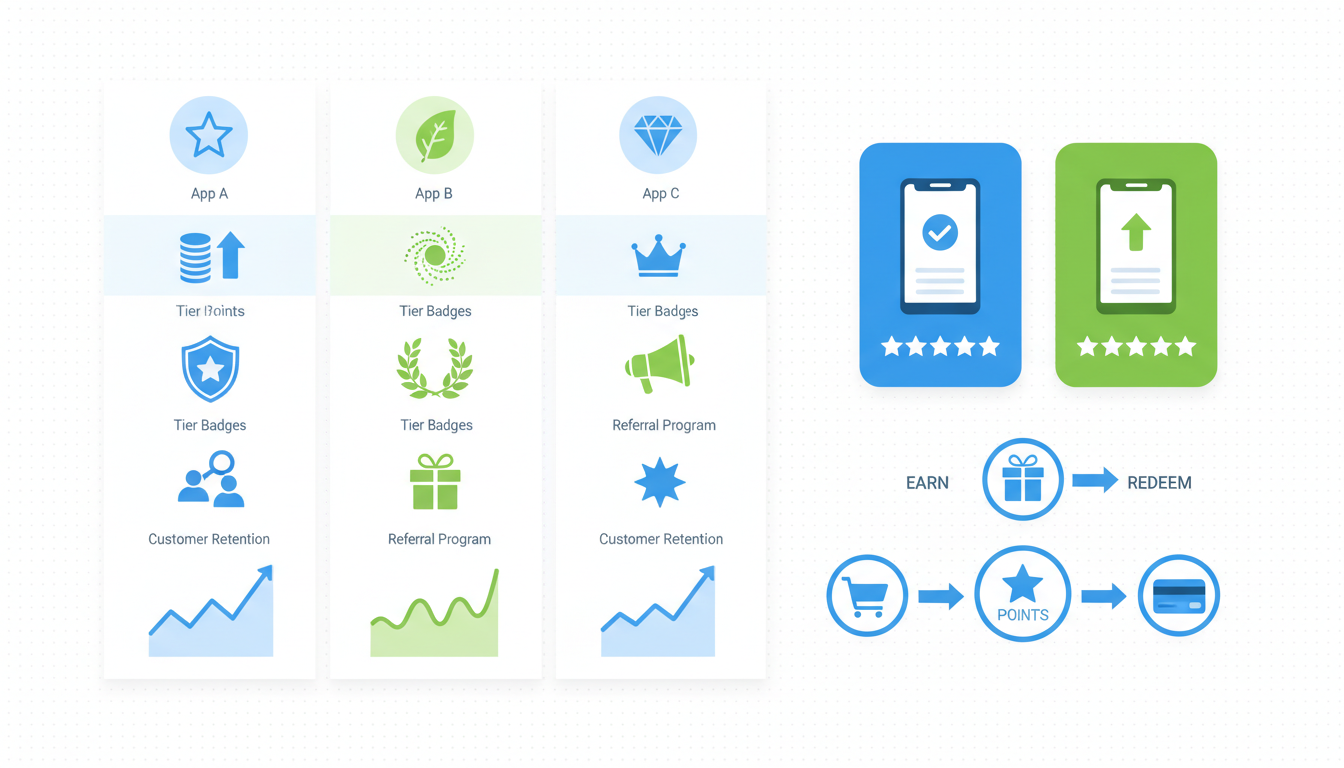
Shopify loyalty apps are the category most operators buy on hope and measure on vibes, and almost nobody runs the math on what each redeemed point actually costs them in margin. The honest answer in 2026 is that Smile wins for stores under $1M GMV that need a working program live this week, Yotpo wins for stores already on Yotpo Reviews or SMSBump that can collapse three bills into one, and LoyaltyLion wins for stores above $3M GMV that need a real flow builder, segmentation that talks to Klaviyo, and tier mechanics beyond points-for-purchase. Pricing math flips twice as you scale: Smile gets expensive past 10k members, Yotpo gets cheaper if you already pay them, and LoyaltyLion only justifies its floor above $3M. The wrong pick costs $200 to $2k a month plus 6 to 10 weeks of program rebuild. Best to pick once.
- Smile fits stores under $1M GMV that need a points-and-rewards program shipped this week.
- Yotpo fits stores already paying for Yotpo Reviews, SMSBump, or Subscriptions.
- LoyaltyLion fits stores above $3M GMV with a CRM team and real lifecycle ambitions.
- Point economics matter more than features. A 5% redemption rate on 5x points wrecks margin.
Why most Shopify loyalty programs waste money
Shopify loyalty apps are sold like they print revenue, but in audits we see the opposite about half the time. The program goes live, signups climb, dashboard shows "lifetime value lifted by 23%," and the founder feels good for six months. Then somebody pulls the actual margin report and realizes the redemption rate hit 8%, average reward redeemed was $14, and gross margin per repeat order dropped from 62% to 51%. The program did not lift LTV. It moved the discount line from "first-order coupon" to "loyalty redemption" and hid it inside a different report.
The thing nobody warns you about: loyalty math is unforgiving when point economics are sloppy. If you give 1 point per dollar spent and let people redeem 100 points for $10 off, that is a 10% discount on every repeat order, baked into the program forever. Most stores set this up in an afternoon, never revisit it, and burn margin for years. The Shopify loyalty program app you pick matters less than the rules you build inside it. The apps are mostly converging on features. The economics are where the money lives or dies.
There is a second trap. Loyalty apps report "loyalty-attributed revenue" the same way email tools report "email-attributed revenue," meaning every order from a member counts, even if that customer would have bought anyway. Real lift only shows up when you A/B test the program against a holdout group, which roughly 5% of stores actually do. Without a holdout, the dashboard always shows the program working. So the audit question we run first is not "which app should you use," it is "what would your repeat rate look like if the program did not exist." If you cannot answer that, the app choice is the smaller problem.
The 3 apps compared at a glance
Smile, Yotpo Loyalty, and LoyaltyLion are the three platforms that show up in roughly 80% of Shopify audits we run. Other tools exist (Stamped Loyalty, Rivo, Marsello, Joy) but the comparison nobody loses sleep over is whether to add a fourth option to the shortlist. The three above cover the realistic decision space.
| Dimension | Smile | Yotpo Loyalty | LoyaltyLion |
|---|---|---|---|
| Best fit GMV | $0 to $1M | $1M to $5M (if on Yotpo stack) | $3M+ |
| Setup time | 2 to 4 hours | 1 to 2 days | 2 to 4 weeks |
| Pricing floor | $49/mo | Bundled with Yotpo (varies) | $499/mo |
| Tier mechanics | Basic (3 tiers) | Strong (unlimited tiers, status logic) | Strongest (rules engine, custom states) |
| Klaviyo integration | Native, event-based | Native, event-based | Native, segmentation-grade |
| Meta CAPI events | Not native | Via Yotpo CDP | Native server-side |
| Reviews integration | Third-party | Built into Yotpo Reviews | Third-party |
| SMS integration | Third-party | Built into Yotpo SMSBump | Third-party (Klaviyo or Attentive) |
| Headless support | Limited | Yes | Yes (full API) |
| Migration in/out | Easy | Medium | Hard (custom rules do not export) |
Smile vs Yotpo loyalty is the comparison that gets run most because both show up at the small-to-mid stage. The honest difference is that Smile is a clean standalone tool that does one job well, and Yotpo Loyalty is a piece of a stack that only makes sense if the rest of the stack is already there. Buying Yotpo Loyalty by itself, without Yotpo Reviews or SMSBump, is overpaying for a tool that competes with Smile feature-for-feature at a higher complexity load.
LoyaltyLion vs Smile is the other comparison worth running, but only at scale. Below $3M GMV, LoyaltyLion's $499/mo floor and 2 to 4 week setup is a tax for capabilities you will not use. Above $3M GMV, LoyaltyLion's rules engine and segmentation-grade Klaviyo sync starts paying back, because that is the scale where program economics need real tuning, not just a points-per-dollar slider.
Pricing math at 1k, 10k, 50k members
Pricing on Shopify loyalty apps is where most comparisons fall apart, because each platform structures tiers differently (some on members, some on orders, some on revenue) and the published "starting at" price almost never matches what a real store pays at scale. The numbers below pull from Smile's pricing page and LoyaltyLion's pricing page as of April 2026, with Yotpo Loyalty bundled inside the Yotpo Email + Loyalty plan because that is how 90% of stores actually buy it.
Monthly cost by program member count, 2026:
| Members | Smile | Yotpo Loyalty (bundled) | LoyaltyLion |
|---|---|---|---|
| 1,000 | $49 | $79 | $499 |
| 5,000 | $199 | $179 | $499 |
| 10,000 | $599 | $279 | $699 |
| 25,000 | $999 | $479 | $899 |
| 50,000 | $1,999 | $799 | $1,299 |
| 100,000 | Custom | $1,299 | $1,899 |
Two things jump out. First, Smile and Yotpo are roughly even at 1k members, then Yotpo pulls ahead hard starting around 10k members and the gap widens fast. At 50k members Smile costs roughly 2.5x what Yotpo costs, which surprises operators who picked Smile for the lower entry price and never revisited the math. Second, LoyaltyLion looks expensive at 1k members because it is. The $499 floor only makes sense once you are at the scale where the rules engine and segmentation depth pay back. Below 5k members, picking LoyaltyLion is paying for capabilities sitting idle.
The trap to watch for: most platforms count "members" as anyone who ever signed up, not active members. So the bill at month 18 reflects a list that has been growing for 18 months, half of which is dead. Smile is the strictest about counting all-time signups. Yotpo and LoyaltyLion let you archive inactive members in some plans, which keeps the bill closer to actual active membership. Best to ask each platform exactly how they define a billable member before signing, not after.
The other trap is annual contracts. Yotpo and LoyaltyLion both push annual deals with discounts that look attractive (10 to 20% off the monthly rate). The discount is real, but you are also locking in a price for a member count you might double in the contract window, with no way to renegotiate downward if the program underperforms. Best to start month-to-month for the first 90 days, validate the program is actually lifting repeat rate against a holdout, then commit annually if the math works.
Point economics: what "1 point = $0.10" actually costs
Point economics is the part of the Shopify loyalty program app decision that almost nobody runs the math on, and it is the part that decides whether the program lifts profit or burns it. Every loyalty program is, mathematically, a discount disguised as engagement. The discount is real, the question is whether it pays for itself in repeat behavior.
Take a typical default setup: 1 point per $1 spent, 100 points = $10 off. That is a 10% discount on every repeat order, the moment a customer hits 100 points. If your gross margin is 60%, you just dropped repeat-order margin from 60% to 50%. If 30% of your customers redeem, you lost 3 percentage points of total margin. On $2M GMV, that is $60k a year of margin gone, traded for what you hope is enough lift in repeat rate to cover it.
The math problem: most stores never measure the lift. They measure "loyalty members spend 2.3x more than non-members," which is true and meaningless, because customers who join loyalty programs are already higher-intent. The right measurement is a holdout: 10% of new customers get no program access, the other 90% do, and you compare repeat rate after 12 months. About 5% of stores run this. Most assume the program lifted retention. Often it lifted dashboard numbers and not real margin.
Levers that move the math, in order of impact:
- Point-to-dollar ratio. 1 point = $0.05 (a 5% effective discount) lifts repeat rate about as much as 1 point = $0.10 (10% discount), at half the margin cost. Most stores default to the higher ratio because the platforms suggest it.
- Redemption threshold. 200 points to redeem instead of 100 doubles the engagement you need before paying out. Customers redeem less often, but the ones who do are 2x more loyal. Margin lift is significant.
- Earn rate on first orders. Giving points for first purchase is paying for behavior that already happened. Best to start point earning at the second order, which costs nothing on first orders and rewards actual repeat behavior.
- Tier thresholds. The jump from base tier to silver tier should require enough spend that only 15 to 20% of members hit it. If 60% of your members are in the top tier, the tiers do nothing.
- Reward type. Free product redemption (rather than dollar discount) lets you pick high-margin items as rewards. A $10 dollar-off coupon costs you $10 in revenue. A "free [accessory]" reward at $4 cost feels worth $20 to the customer and costs $4 to you.
The platform you pick affects which of these levers is easy to pull. Smile makes the basic levers easy and the advanced ones impossible. Yotpo Loyalty handles tier logic well but the reward catalog is constrained. LoyaltyLion's rules engine handles all five cleanly, which is most of the reason it costs what it costs. If you do not plan to tune any of these, the rules engine is wasted spend.
Klaviyo + Meta integration depth
The shopify loyalty apps that win at scale all live or die on how cleanly they pipe member events to Klaviyo and to Meta. The points dashboard inside the loyalty app does not drive revenue. The flows that fire when a member earns, redeems, or upgrades a tier do. If those events do not arrive in Klaviyo cleanly, the program is invisible to the marketing engine that actually moves money.
Klaviyo integration depth, ranked:
LoyaltyLion sends granular events: Points Earned, Points Redeemed, Tier Upgraded, Tier Downgraded, Reward Available, Reward Expiring, Birthday Earned, Referral Made, Referral Converted. Each event carries the full context (point balance, tier name, reward type, expiration date) as profile properties, so Klaviyo segmentation can run on "members about to drop a tier" or "members within 50 points of a reward." This is the integration depth that turns a loyalty program from a points dashboard into a lifecycle engine. About 8 out of 10 LoyaltyLion stores we audit are using these flows. The rest paid for the integration and never built the flows, which is a different problem.
Yotpo Loyalty sends roughly the same event set but the property fields are flatter, so segmentation on "members with X points" works but conditional logic on "members within 50 points of next reward" needs custom math inside the Klaviyo flow. Workable, just an extra step. The advantage Yotpo carries is that if the store is also on Yotpo Reviews and SMSBump, the data lives in one Yotpo CDP, which means review-based loyalty triggers (earned points for leaving a review) and SMS-based reward notifications work out of the box without a third integration to maintain.
Smile sends the basic event set (Points Earned, Points Redeemed, Reward Available) and that is it. No tier events because tiers are basic. No reward expiration events because the catalog is simple. For an under-$1M store running 4 standard Klaviyo flows, this is enough. For a store running 12 lifecycle flows with branching, the missing event types create gaps that show up as segments that "should fire" but never do.
Meta CAPI integration matters less than Klaviyo integration but is worth noting. LoyaltyLion fires server-side Meta events for member signup, point earn, and redemption, which means the Meta algorithm can optimize on loyalty actions as conversion events. Yotpo passes events through the Yotpo CDP into Meta when the Yotpo Pixel integration is enabled, but the dedup with Shopify's native F&I app gets messy and we have seen duplicate event issues here in audits. Smile does not pipe to Meta CAPI at all. For most stores, Meta loyalty events are nice-to-have, not load-bearing.
The honest take: integration depth is the biggest hidden differentiator across the three platforms. Feature lists make them look similar. The integration depth is where they diverge, and it is the dimension that costs the most to discover after migration.
Which store stage fits which app
The loyaltylion vs smile question, and the smile vs yotpo loyalty question, both have the same answer: it depends on stage, and the stage definition is more nuanced than just GMV. Three inputs decide the right pick: revenue scale, existing app stack, and CRM team capability. Get those three right, the platform falls out of the answer.
Stage 1: Pre-product-market-fit, under $500k GMV, no marketing team. Skip loyalty entirely. The repeat rate problem at this stage is product fit, not loyalty mechanics. Spending $49 a month on Smile to "lift retention" before you have something customers want to come back for is solving the wrong problem. Best to nail repeat purchase intent first through product, packaging, and post-purchase experience. Loyalty comes later.
Stage 2: $500k to $1.5M GMV, lean team, basic Klaviyo flows. Smile is the right pick. The setup is fast, the price scales gently below 5k members, and the feature set covers the basics (points, three tiers, referrals) cleanly. The capabilities you would get from upgrading to LoyaltyLion at this stage are wasted on a team that does not have time to build them. Smile gets out of the way and lets you focus on email and ads.
Stage 3: $1.5M to $5M GMV, on Yotpo Reviews or SMSBump, growing CRM team. Yotpo Loyalty is the cleanest pick. The bundle pricing closes the gap with Smile, the integration with the rest of the Yotpo stack saves real maintenance time, and the tier logic holds up to genuine optimization. The trap at this stage is buying Yotpo Loyalty without the rest of the Yotpo stack. Standalone, it competes with Smile at a higher price for marginal feature wins.
Stage 4: $3M to $20M GMV, dedicated CRM person, sophisticated Klaviyo flows. LoyaltyLion is the pick. The rules engine, segmentation depth, and Klaviyo event richness pay back because a real operator is using them daily. This is the stage where the program economics get tuned (point-to-dollar ratio, tier thresholds, reward catalog) and the platform that lets you tune them cleanly wins. Smile becomes a constraint at this scale. Yotpo Loyalty works but the rules engine lags LoyaltyLion's by 12 to 18 months of feature gap.
Stage 5: $20M+ GMV, enterprise stack, custom CRM. Both LoyaltyLion and custom-built solutions become real options. Some enterprise stores at this scale move off LoyaltyLion to a build that integrates directly with Klaviyo CDP and a custom rules layer. Most stay on LoyaltyLion because the build cost rarely pays back vs the SaaS spend.
The stage fit framework matters more than the feature comparison because the feature gap between the three apps closes every quarter. The stage gap (your store's actual operational maturity) is what makes one platform feel right and another feel like overhead, and that gap moves slowly.
Measuring loyalty ROI honestly
Most "loyalty ROI" reporting is dashboard theater. The platform shows "loyalty members spent $1.2M last quarter," which is true and meaningless. The right number is incremental margin lift attributable to the program, measured against a holdout. Roughly 5% of stores actually do this. The other 95% trust the dashboard, which always says the program works because the platform sells the dashboard.
The honest measurement framework, in three steps:
-
Set up a holdout. New customers get randomly assigned: 90% into the program, 10% into the holdout (no program access, no program emails). Run for 90 days minimum. The platforms make this hard on purpose because clean holdouts often show smaller lift than the dashboard suggests. Klaviyo's segment-based holdout setup is the cleanest way to enforce this on the email side.
-
Compare repeat rate, AOV, and gross margin per order between groups. Loyalty members vs holdout. The metric that matters is gross margin per customer, not revenue per customer, because the program costs you margin every redemption. If repeat rate lifted 8% but margin per order dropped 6%, the net win might be 2% or it might be negative depending on order volume.
-
Recalculate point economics quarterly. The first set of rules you ship is almost always too generous. Stores that revisit the redemption threshold, point-to-dollar ratio, and tier mechanics every quarter typically see margin per repeat order improve 3 to 5 points within a year. Stores that set it up and forget it bleed margin invisibly for years.
The other measurement nobody runs: cost per active member. Take your monthly platform cost, divide by the number of members who earned or redeemed in the last 30 days. That is your real cost per active member. Smile at $599/mo with 2,000 active members on a 10k member account is $0.30 per active member. LoyaltyLion at $899/mo with 8,000 active members on a 25k account is $0.11 per active member. The platform that looks cheaper on the headline price is often more expensive per active member because the activation rate is lower.
Best to be honest about which numbers you trust. The platform's "loyalty-attributed revenue" number is not it. Repeat rate vs holdout, gross margin per repeat order, and cost per active member are the three numbers that tell the truth about whether the program is paying back.
Frequently asked questions
Which Shopify loyalty app is best for a store doing $800k a year?
How does Smile vs Yotpo loyalty actually compare on features?
When does LoyaltyLion become worth $499 a month?
Can I migrate from Smile to LoyaltyLion without losing member point balances?
Do these loyalty apps integrate cleanly with Klaviyo or do they break flows?
Should I run a loyalty program holdout to measure real lift?
Shopify loyalty apps are one of those categories where the platform you pick matters less than the rules you build inside it. Smile, Yotpo Loyalty, and LoyaltyLion all ship working programs. The difference between a loyalty program that lifts margin and one that quietly burns it is point economics, holdout measurement, and quarterly rules tuning, none of which the platform decides for you. Best to run the math on your actual member count, your real activation rate, and your gross margin per repeat order before signing an annual contract. If you are under $1M GMV, Smile gets out of the way. If you are already on Yotpo, the bundle math probably wins. If you are above $3M with a CRM operator on staff, LoyaltyLion's rules engine pays back. The middle band is genuinely close and the right call depends on team capability more than tool capability. Pick once, build right, measure with a holdout, and revisit point economics every quarter.
Get a full X-ray of your ad account
Paste your Meta and Google Ads. See exactly where signal is leaking. Free. 60 seconds.