6 Shopify upsell apps compared for 2026
 By Dror Aharon
·
CEO, COREPPC
·
Updated April 17, 2026
·
11 min read
By Dror Aharon
·
CEO, COREPPC
·
Updated April 17, 2026
·
11 min read
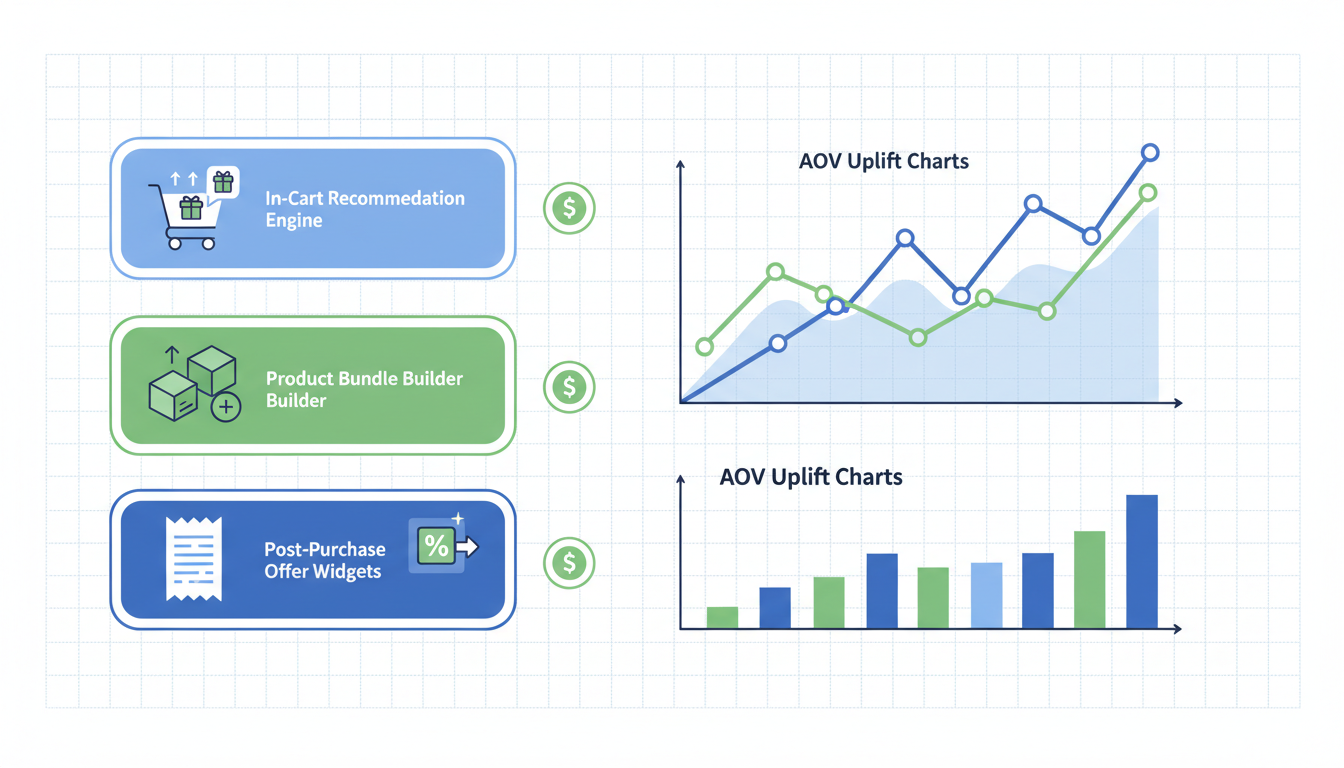
Shopify upsell apps is the category most operators shop for once and live with for years, which is why the wrong app ends up in the stack carrying $5k to $20k a month in left-on-the-table AOV before anybody runs the math. The honest answer in 2026 is that no single app wins across the board. Six apps lead the category, each strongest at a different surface, and the right pick is the one that matches where your funnel actually leaks. Rebuy and Bold lead on smart cart. Zipify OneClickUpsell and AfterSell own the post-purchase page. Honeycomb fits low-AOV stores under 1k orders a month. ReConvert spans both surfaces with weaker depth at each. We have audited stores running all six. The miss is almost never the app, it is picking before knowing whether the leak is pre-checkout, in-cart, or post-purchase. Pick once, with the right slice.
- Pre-checkout cart upsell: Rebuy and Bold lead, Honeycomb fits small stores.
- Post-purchase one-click: Zipify OneClickUpsell and AfterSell lead, ReConvert spans both with less depth.
- Pricing diverges sharply above 5k orders a month, where Rebuy's usage tier bites.
- Wrong app in the stack costs $5k to $20k a year before the AOV math finally surfaces it.
Why upsell app choice is underrated
Shopify upsell apps get picked the way most stack decisions get made, on a podcast tip or a "what does everyone use" Slack thread, which is why so many stores carry the wrong app for two years before somebody splits revenue by surface and notices the mismatch. The category gets dismissed as "they all kind of do the same thing." They do not. Pre-purchase, in-cart, and post-purchase are three distinct problems with three distinct conversion ceilings, and the apps that lead each surface are not the same apps.
The cost of getting it wrong is real. We have audited stores paying $400 a month for a smart cart on a single-product funnel where the cart never expands, and stores running a $95 post-purchase app where acceptance sits at 2% because the offer is wrong, not because the app is. Both times the operator blamed the app. Both times the app was fine, the picking process was the problem.
The way to think about this in 2026 is upstream. Where does your funnel actually leak? AOV under $30 with one hero SKU and 200 orders a month is a different problem than $80 AOV with a 100 SKU catalog and 8k orders. Best to figure out the leak first, then pick the tool.
The 6 apps ranked by Shopify DTC fit
The shopify upsell apps category has narrowed to six serious options in 2026 after a long shake-out. Older apps either consolidated, lost developer attention, or stopped keeping up with Shopify's Checkout Extensibility framework. The six below all have certified extensions, active development, and enough audit data behind them for us to call out where they fit and where they do not.
| App | Best surface | AOV sweet spot | Monthly cost (5k orders) | Standout strength |
|---|---|---|---|---|
| Rebuy | Smart cart + cart drawer | $50+ | $449 | AI recommendations, deep widget library |
| Zipify OneClickUpsell | Post-purchase page | $40+ | $199 | Native one-click, Zipify Pages bundle |
| AfterSell | Post-purchase page | $30+ | $149 | Cheaper than Zipify, similar one-click flow |
| Bold Upsell | Pre-purchase + cart drawer | $40+ | $99 | Mature, simpler than Rebuy, predictable pricing |
| ReConvert | Spans both surfaces | $25+ | $79 | Cheap, covers both surfaces with less depth |
| Honeycomb Upsell Funnels | Pre-purchase + post-purchase | $20+ | Free to $99 | Free tier viable for stores under 1k orders/mo |
Rebuy wins on smart cart depth and AI-driven recommendations, with a widget library covering product page through thank-you page. The cost is the steepest learning curve in the category and pricing that climbs hard above 5k orders. Worth it for stores with AOV above $50 and a multi-SKU catalog, overkill for single-product funnels.
Zipify OneClickUpsell wins on post-purchase one-click. Native acceptance runs 8 to 14% on stores we audit, the bundled Zipify Pages product covers landing pages in the same vendor, and pricing stays flat above 5k orders. Pre-checkout depth is shallow (no smart cart, no AI recs).
AfterSell does most of what Zipify does at the post-purchase surface for roughly half the price. The one-click flow works, the offer builder is decent, the analytics are clean. The trade-off is no landing-page product, so you still pay separately for GemPages or Shogun.
Bold Upsell is the mature middle. Pre-purchase popup and in-cart upsell both work cleanly, the interface is friendlier than Rebuy's, pricing stays flat past 10k orders. The cost is no real AI engine and a thinner widget library.
ReConvert spans both surfaces in one app at lower combined cost than Rebuy plus Zipify, with shallower depth at each. Post-purchase acceptance runs 2 to 4 points lower than Zipify or AfterSell on the same offer. Worth it for stores willing to accept that ceiling.
Honeycomb covers the small-store band the other five overprice for. The Honeycomb app store listing shows the free tier handles up to 100 upsell views a month. Paid scales to a few hundred orders before the math gets thin. Best under $200k GMV.
Pricing math at 1k, 10k, 50k orders/month
Pricing is where most upsell app comparison posts fall apart, because each app scales differently and most blog posts quote the entry tier as if it applied at scale. The numbers below pull from each app's pricing page as of April 2026, on the plan most stores actually run for that order volume. Rebuy's pricing page and Zipify's pricing page publish the full tier ladders for the two most expensive options.
Monthly cost by order volume, 2026:
| Orders/month | Rebuy | Zipify OCU | AfterSell | Bold Upsell | ReConvert | Honeycomb |
|---|---|---|---|---|---|---|
| 500 | $99 | $95 | $34 | $59 | $29 | Free |
| 1,000 | $99 | $95 | $79 | $99 | $29 | $50 |
| 5,000 | $449 | $199 | $149 | $99 | $79 | $99 |
| 10,000 | $749 | $199 | $249 | $99 | $179 | Custom |
| 25,000 | $1,249 | $399 | $499 | $199 | $349 | Custom |
| 50,000 | $1,749 | $399 | $499 | $199 | $499 | Custom |
Three things jump out. First, the apps cluster between $79 and $99 around 1k orders a month, then spread out hard above 5k. Rebuy at 50k orders is more than 8x the cost of Bold Upsell at the same volume, a real number to weigh against the AI recommendations and widget depth. Second, Bold stays remarkably flat past 10k orders, which is why mid-market stores that want predictable cost gravitate to it. Third, Honeycomb genuinely is free for very small stores, no asterisk, which makes it the right pick under 200 orders a month.
The trap: Rebuy and ReConvert scale on tiers that step up sharply at thresholds. A store doing 4,800 orders pays one tier and a store doing 5,200 pays the next, with the jump often $200 to $400 a month. Best to estimate your 12-month order trajectory before signing, not just current volume.
The honest math at scale: above 25k orders, the gap between the cheapest (Bold) and the most expensive (Rebuy) reaches $1,000 a month. That gap only pays back if Rebuy's smart cart and AI recs actually drive $1k+ a month in incremental AOV. In our audit data, yes for AOV above $60 with a heavy-cart mix, usually no for AOV under $40 and single-product funnels.
Pre-purchase vs post-purchase vs cart upsell: the three distinct problems
The single biggest miss in upsell app comparison threads is treating "upsell" as one problem. It is not. There are three distinct surfaces, with three different conversion ceilings and three different customer mindsets. Treating them as one is how stores pay for capabilities at the wrong surface and leave revenue at the surface that actually matters.
Pre-purchase upsell happens before add-to-cart. Product page bundles, "frequently bought together" widgets, quantity discount popups. Ceiling is low (1 to 4% AOV lift) because the customer has not committed yet, and friction can drop add-to-cart rate. Best app: Bold or Rebuy.
Cart upsell happens between add-to-cart and checkout. Cart drawer recommendations, bundle upgrades, free-shipping thresholds. The customer has signaled intent but not locked in. Ceiling is medium (8 to 14% AOV lift). Best app: Rebuy for AI-driven smart cart, Bold for simpler bundle logic.
Post-purchase upsell fires after checkout completes, on a one-click offer page before order confirmation. Customer has already paid. Remaining decision is yes or no to one more product, one tap. Ceiling is highest in the funnel (8 to 14% acceptance, 12 to 22% order lift) because there is no payment friction. Best app: Zipify OneClickUpsell or AfterSell.
Most stores leak at the surface they have not built for. A heavy smart cart with no post-purchase page leaves the highest-conversion surface empty. A great post-purchase page with no cart-drawer recs misses pre-checkout AOV expansion. Best to audit which surface is currently empty before adding capability to one that is already covered.
Integrations: Shopify native + Klaviyo + Meta
All six install in 2 minutes and pull standard order, customer, and product data on a real-time webhook. Depth differences only matter once you run attribution properly or layer on CRM and ad-platform events. See Shopify's checkout extensibility docs for the framework all six build against.
Klaviyo: Rebuy leads here cleanly. When a customer accepts a cart rec, Rebuy fires a custom Klaviyo event the flow builder can trigger on. Bold and Zipify pass standard order events but custom upsell-acceptance events need a Zapier or webhook bridge. AfterSell added a native Klaviyo integration in late 2025 that handles post-purchase acceptance without a bridge. ReConvert and Honeycomb pass order events only, no custom acceptance triggers.
Meta pixel and CAPI: all six pass core events cleanly because Shopify's Facebook and Instagram app handles Purchase, AddToCart, ViewContent, and InitiateCheckout regardless of which upsell engine runs. Purchase fires with full cart value including accepted upsells. What differs: Rebuy fires AddToCart when a cart rec is accepted, which flows into Meta's optimization signal. Zipify and AfterSell post-purchase acceptances do not fire a second AddToCart, so Meta sees a single larger Purchase rather than two funnel actions.
Checkout Extensibility: all six have certified extensions as of 2026. Headless storefronts (Hydrogen, Next.js, custom) work with all six via the Admin API webhooks, but Rebuy and Bold have the strongest developer documentation.
Category fit: supplements vs apparel vs electronics vs home
Product category shapes the right pick more than most operators expect. Across audits in supplements, apparel, electronics, home, beauty, pet, and F&B, the pattern is clear enough to call out directly.
Supplements and beauty tilt toward Rebuy or Bold for cart upsell. Customers buying protein powder are likely to also want a shaker, a creatine bottle, or a subscription upgrade. AI has strong cross-sell signal here, AOV sits in $40 to $80 where smart cart math pays back fast, and in-cart subscription upgrades drive LTV. We see 11 to 17% AOV lift from smart cart alone on these categories.
Apparel splits by price. Basics-heavy apparel (tees, socks, underwear) tilts toward Rebuy or Bold for cart bundle logic. Fashion-forward apparel with higher prices tilts toward Zipify or AfterSell because the post-purchase page fits "you bought the dress, want the bag?" better than cramming it into the cart before commitment. The cart-drawer approach can actually drop conversion on higher-AOV fashion.
Electronics and home goods lean toward Zipify or AfterSell. AOV is typically $150+, and a customer who just committed $400 to a sofa is more open to adding a $50 pillow after checkout than seeing it clutter the cart during the buying decision. Post-purchase acceptance on these categories runs 10 to 14% on a well-matched offer.
F&B with subscription models tilts toward Rebuy because the in-cart subscription upgrade is the biggest single lever. Pet splits like supplements (Rebuy above $1M GMV, Bold below). Single-product hero stores with sub-$30 AOV are where nothing moves the needle much, and Honeycomb's free tier is often the right answer until volume grows.
Migration cost
Migration between any two of these apps is where "I will just switch" plans fall apart faster than operators expect. All six market install as plug-and-play. Reality is 2 to 3 weeks of rebuild and $2k to $6k in agency cost, or 30 to 60 hours of internal time.
Week 1 is audit. Inventory every widget, funnel, rule, and A/B test in the old app. Most stores find 8 to 12 things live, 3 or 4 they forgot about, and 1 or 2 not actually converting that have been burning a plan slot for months. Cleaning that down is 60% of the value of the migration itself.
Week 2 is rebuild. Widget logic does not export between any of the six cleanly. Even basic rules like "show offer if cart above $75" need to be recreated by hand. A simple smart cart takes 4 to 6 hours. A complete rebuild across cart, product page, and post-purchase runs 30 to 40 hours for a mature setup. AfterSell to Zipify or vice versa is the cleanest path because the concepts map closely. Rebuy to anything else is the hardest because the widget depth does not exist in the cheaper apps.
Week 3 is parallel run. Keep both apps live 5 to 7 days, validate attribution, then turn off the old one. Upsell-attributed revenue gets calculated differently between apps, so parallel reveals real attribution gaps. Turning off the old app before parallel validation is how stores report a 30% revenue drop that is actually just an attribution shift.
The honest math: if the new app adds a capability you actually use, migration pays back in 2 to 4 months. If it is just "slightly cheaper," the math rarely pencils. A $4k migration to save $300 a month pays back in 13 months, on the edge. Best to migrate for capability fit, not marginal cost savings.
Frequently asked questions
What is the best upsell app shopify stores under $500k a year should use?
Are shopify cross sell apps and upsell apps the same thing?
Can I run Rebuy and Zipify OneClickUpsell at the same time?
How much does a post-purchase one-click upsell page actually lift AOV?
Do upsell apps work with Shopify's Checkout Extensibility framework?
Is there a case where no shopify upsell apps are the right answer?
Shopify upsell apps deserve more than a feature checklist and a "what does everyone use" thread. The honest answer depends on AOV, order volume, product category, and which surface in the funnel currently leaks the most revenue. Best to run the surface audit first (where is your AOV actually thin, pre-purchase, in-cart, or post-purchase) before picking the app. If the leak is in the cart drawer, Rebuy or Bold earns its monthly fee. If the leak is post-purchase, Zipify OneClickUpsell or AfterSell is the cleaner pick. If the leak is at small order volumes where no paid app pays back, Honeycomb's free tier is the right call until growth justifies more. Pick once, build right, and revisit only when order volume, AOV, or category mix shift meaningfully.
Get a full X-ray of your ad account
Paste your Meta and Google Ads. See exactly where signal is leaking. Free. 60 seconds.